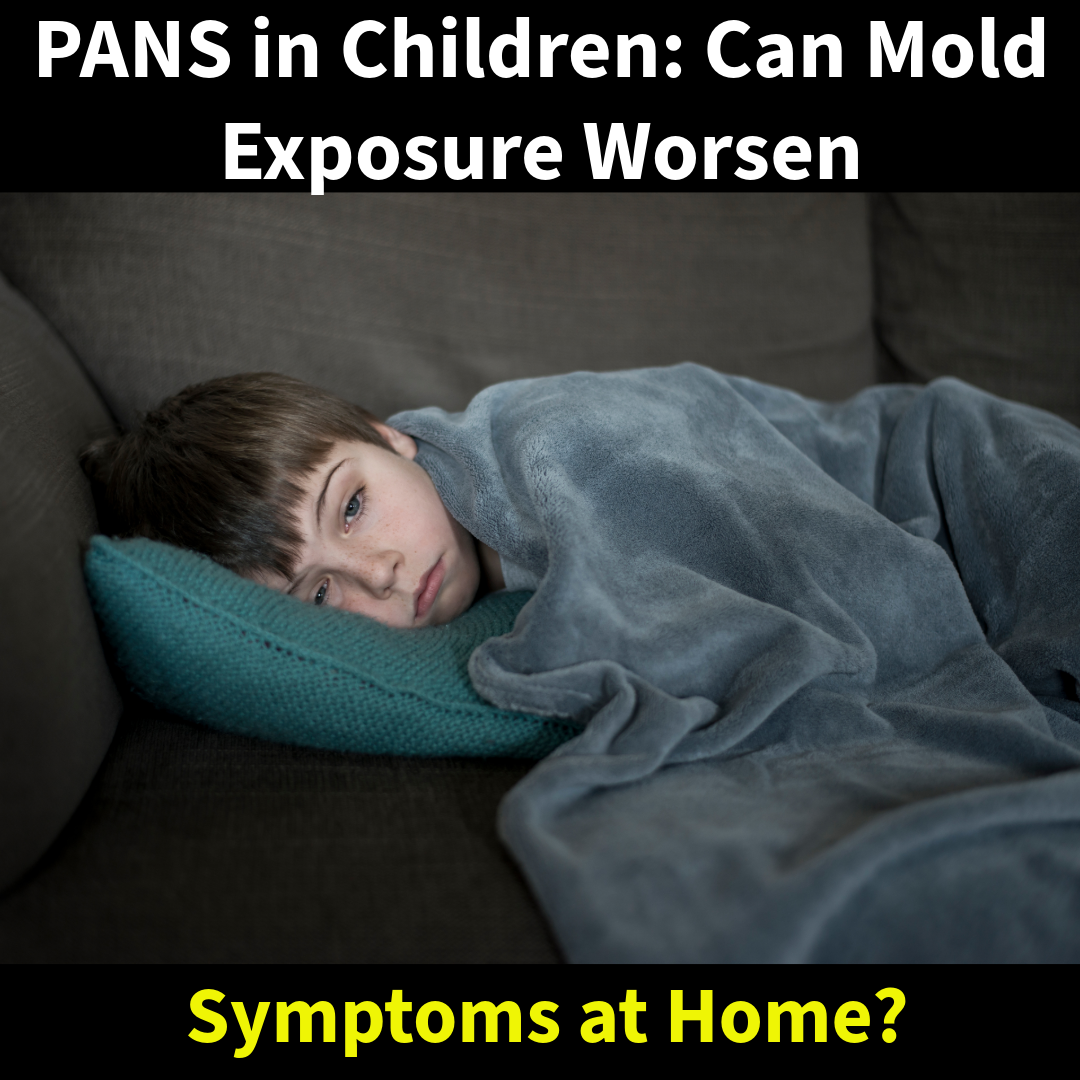
PANS in Children: Can Mold Exposure Worsen Symptoms at Home?

Parents of children with PANS (Pediatric Acute-onset Neuropsychiatric Syndrome) often describe the experience as overwhelming and confusing. Symptoms can appear suddenly, change rapidly, and seem difficult to manage—even with appropriate medical care. What many families don’t realize is that environmental factors inside the home may play a role in symptom severity, especially for children who are already dealing with immune and neurological inflammation.

One environmental factor that is frequently overlooked is mold exposure. This blog is not about diagnosing or treating PANS. Instead, it is meant to help parents understand why the home environment matters, and why mold exposure may be something worth ruling out when symptoms persist or worsen.


PANS is a clinical condition characterized by the sudden onset of neuropsychiatric symptoms in children, which may include:

  • Obsessive-compulsive behaviors
  • Anxiety or panic
  • Mood changes or irritability
  • Regression in behavior or academic performance
  • Sensory sensitivities or cognitive “fog”

Researchers believe PANS involves neuroinflammation and immune system dysregulation, often following infections or other immune triggers. Every child’s presentation is different, and treatment typically involves medical oversight.


Children with PANS are often more sensitive to stressors, particularly those that affect the immune system. While infections are well recognized, environmental exposures inside the home are often missed.

Homes can contain:

  • Allergens
  • Irritants
  • Airborne particles
  • Hidden moisture and microbial growth

For a child already experiencing inflammation, these exposures may increase the body’s overall inflammatory burden, potentially making symptoms more difficult to manage.


Mold does not cause PANS.
However, mold exposure may act as an environmental stressor for some children with immune sensitivity.

Mold releases:

  • Spores
  • Microscopic fragments
  • In some cases, mycotoxins

These substances can trigger immune responses, particularly in sensitive individuals. In children already dealing with neuroinflammation, additional immune activation may worsen symptoms or slow recovery. Mold does not cause PANS — but in certain children, exposure may contribute to symptom flare-ups or increased inflammatory stress. Not all children react the same way. Some may be unaffected, while others may experience noticeable changes when exposed.


Parents sometimes notice patterns such as:

  • Symptoms improving when the child is away from home
  • Behavioral or cognitive changes that worsen indoors
  • Increased anxiety, fatigue, or irritability in certain rooms
  • A history of water leaks, flooding, or humidity problems

These patterns don’t automatically mean mold is present—but they do justify further evaluation, especially when symptoms persist despite treatment.


One of the most common misconceptions is that mold must be visible or have a strong odor. In reality:

  • Mold often grows behind walls, under flooring, or in attics
  • Past water damage can lead to hidden growth even years later
  • Homes can test “dry” on the surface while moisture remains trapped inside building materials

This is particularly important for families with medically sensitive children, where even low-level exposure may matter.


Mold testing is not a cure and should never replace medical care. However, it can be a useful rule-out step when:

  • Symptoms persist or worsen without a clear explanation
  • A child seems to improve outside the home
  • The home has a history of leaks, flooding, or poor ventilation
  • Multiple family members experience unexplained symptoms

Environmental testing helps families make informed decisions, rather than guessing.


Parents of children with PANS often feel dismissed or overwhelmed. Considering the home environment is not about blame—it’s about reducing unnecessary stress on a child’s system wherever possible.

Ruling out environmental factors like mold can provide peace of mind and help ensure the home is a supportive place for healing, alongside appropriate medical care. If you suspect your home environment may be contributing to ongoing health concerns, working with qualified professionals to evaluate conditions can be a valuable step.
Mold in Exton: A First-Time Buyer’s Lesson in Why Mold Inspections Matter

Buying your first home should be exciting — but it can also be overwhelming, especially when you’re relying on others to guide you. That was the case for a recent customer in Exton, PA, who learned just how important a professional mold inspection can be.

Trusting the Realtor and Inspector

Like many first-time buyers, she leaned heavily on her realtor and the home inspector they recommended. Both advised her that a mold inspection wasn’t necessary. With no prior experience buying a home, she almost took their word for it.

A Father’s Instinct

During a walkthrough, her father noticed a musty odor in the crawl space. Trusting his instincts, he encouraged her to get a mold inspection anyway. She called MSI, and we explained why this was so important:

“A mold inspection during the buying process is the one chance you have to find out what’s really going on before their problem becomes your problem.”

What the Inspection Found

The results were eye-opening:

  • Mold in the crawl space
  • Mold in the attic
  • Mold in one of the guest bedrooms

Without a proper inspection, all of this would have gone completely unnoticed until after settlement — and by then, it would have been her responsibility to pay for remediation.

The Cost and the Options

Our remediation estimate came in at over $12,000. Like most first-time buyers, she didn’t have that kind of money available out of pocket. We worked with her to explore options, including:

  • Negotiating a credit off the sale price
  • Holding funds in escrow until remediation was complete

She ultimately secured money in escrow, closed on the home, and MSI was onsite the day of settlement to begin remediation. Five days later, the project was complete and her new home was safe.

The Bigger Lesson

This story shows the true value of a mold inspection when buying a home. If she had listened to her realtor and inspector, she would have been stuck with a major mold problem and no funds to fix it. Unfortunately, some realtors and inspectors are more motivated to push the sale through than to protect the buyer’s long-term interests.

Protect Yourself Before You Buy

A mold inspection is one of the most important steps in buying a home — especially in older houses or properties with basements and crawl spaces like many in Exton. Don’t let someone else’s problem become your financial burden.

If you’re buying a home in Exton or the surrounding area, call MSI at 215-339-1769 for a professional mold inspection and remediation plan you can trust.

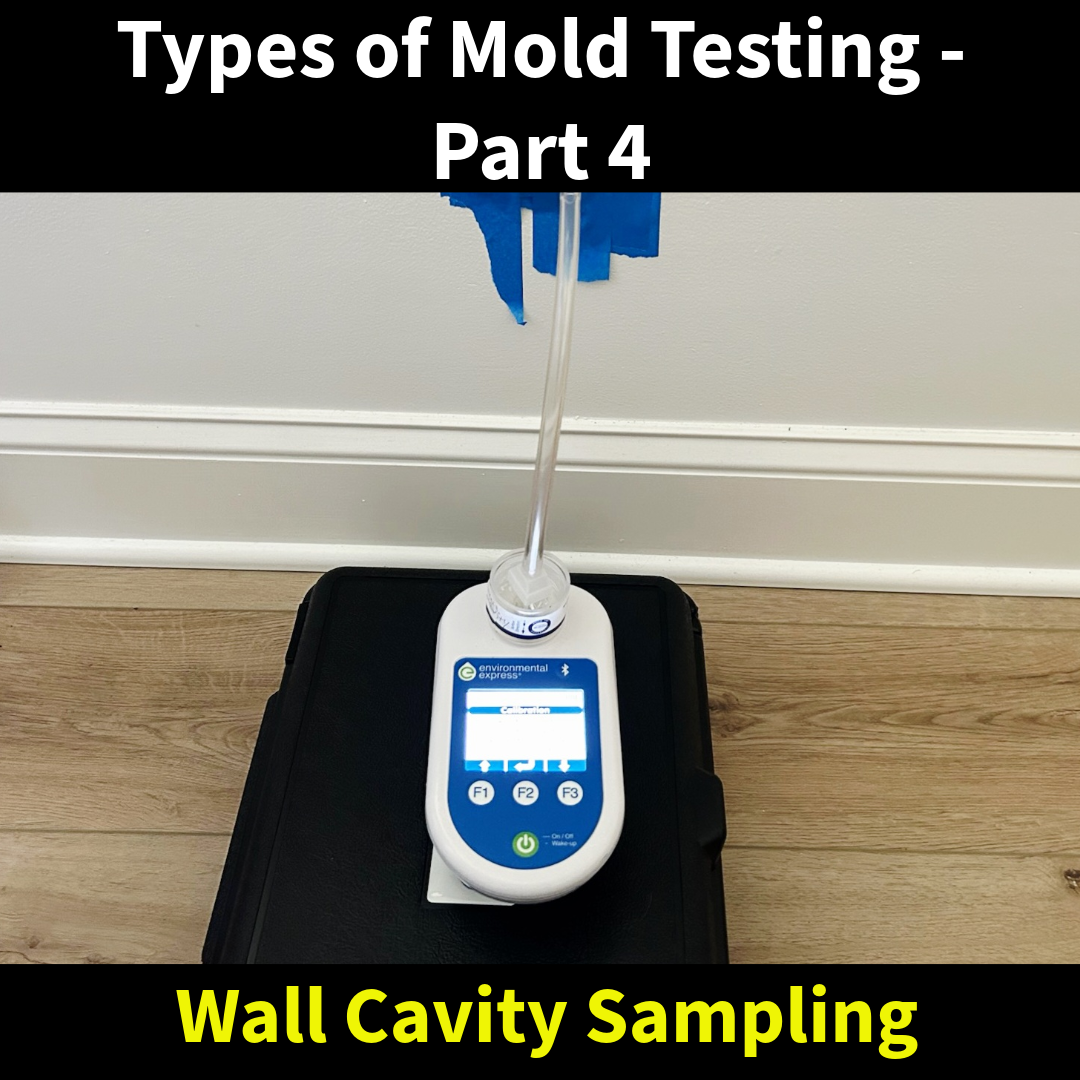
Types of Mold Testing: Part 4 – Wall Cavity Testing

Not all mold problems grow in plain sight. Some of the most damaging infestations hide inside walls, under floors, or behind cabinets. These hidden areas stay damp long after a leak or flood, creating perfect conditions for mold growth. That’s why inspectors often use inner-wall cavity testing to confirm whether mold is present where you can’t see it.

How Cavity Testing Works

  • A trained inspector drills a small, discreet hole into the wall or ceiling near the suspected area.
  • A sterile tube or cassette is inserted to pull an air sample from inside the cavity.
  • The sample is sent to a certified laboratory, where spore counts are compared to baseline indoor and outdoor levels.

This process gives a direct look at what’s happening behind the surface — without having to tear down entire sections of drywall.

When It’s Used

  • Insurance Claim Disputes: Homeowners are often told “no visible damage, no problem.” Cavity testing can prove hidden mold exists and help validate claims.
  • Follow-Up to Positive Tests: If a surface or air sample in the room already showed elevated spores, cavity testing helps confirm whether mold is also thriving behind the walls.
  • Suspected Leaks: When there’s a history of plumbing issues, roof leaks, or water intrusion but no obvious staining, cavity testing can identify hidden moisture damage.
  • Mystery Odors: A persistent musty smell is often the first clue that mold is active behind finished surfaces.

Why It Matters

Mold hidden inside walls can spread unchecked for months, making remediation more invasive and expensive. By detecting the problem early, inner-wall cavity testing provides homeowners with clear answers — and the documentation they need when dealing with insurance companies, landlords, or contractors.

Protect Your Property with Expert Mold Testing

If you suspect hidden mold in your home or business, don’t wait for the damage to spread. At MSI, we use industry-standard testing methods, including cavity sampling, to uncover mold where it hides and provide you with a clear plan for remediation.

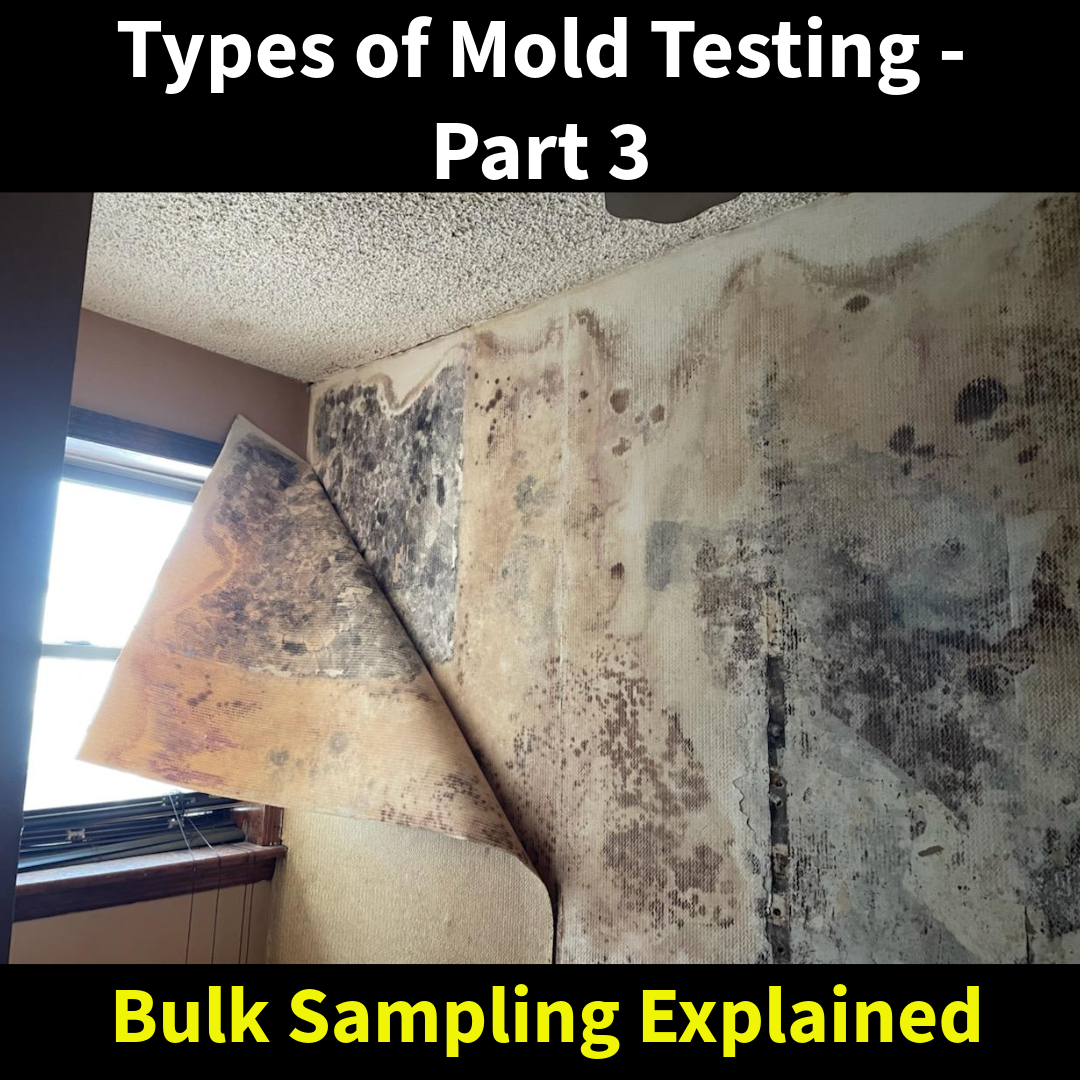
Types of Mold Testing: Part 3 — Bulk Sampling Explained

When it comes to mold testing, there isn’t a one-size-fits-all method. In our earlier posts, we covered air sampling and surface sampling, both of which are useful for detecting airborne spores and identifying mold growth on visible surfaces. But what if the concern runs deeper — inside the actual building materials? That’s where bulk sampling comes in.

What Is Bulk Sampling?

Bulk sampling involves physically removing a portion of a material suspected of mold contamination — such as a piece of drywall, insulation, wood, or carpet — and sending it to a laboratory for analysis. Unlike air testing, which measures spores in the environment, or surface testing, which captures mold directly from a wall or countertop, bulk sampling provides direct evidence of what’s inside the material itself.

How the Process Works

  1. Selection of the Sample Area – A certified inspector identifies the material most likely to show contamination. This might be drywall around a window leak, flooring in a basement, or insulation inside a wall cavity.
  2. Careful Removal – A small section of the material is cut out using sterile tools. It must be handled carefully to avoid cross-contamination.
  3. Sealed for Transport – The sample is placed in a sterile container or bag and labeled with the exact location it came from.
  4. Laboratory Analysis – At the lab, technicians examine the material under a microscope and may perform cultures to identify the exact type of mold and the extent of colonization.
  5. Report & Interpretation – The results are compared against industry standards and presented in a clear report that homeowners, insurance adjusters, or even courts can understand.

Why Bulk Sampling Matters

Bulk sampling is not always necessary, but when it is, it can be the deciding factor in serious cases:

  • Insurance & Legal Disputes – A homeowner claiming hidden water damage or a tenant alleging unsafe living conditions often needs indisputable proof. A piece of mold-infested drywall carries far more weight than air readings alone.
  • Remediation Decisions – Sometimes materials can be cleaned and salvaged. Other times, replacement is unavoidable. Bulk sampling helps make that call with certainty.
  • Health & Safety – If mold is inside porous materials, it can continue spreading even if the surface looks clean. This test reveals contamination most people can’t see.

A Real-World Scenario

Consider a homeowner who notices a musty odor in their finished basement but sees no visible mold. Air samples show elevated spore counts, but the insurance company questions the source. During inspection, we identify staining on a small section of drywall near the baseboard. A bulk sample is collected and sent to the lab, which confirms active mold growth within the gypsum core. This undeniable evidence proves the presence of hidden contamination, helping the homeowner secure coverage for full remediation.

Pros & Cons of Bulk Sampling

Pros:

  • Conclusive, physical evidence of contamination.
  • Strong documentation for lawsuits, insurance claims, and disclosure cases.
  • Guides clear remediation decisions.

Cons:

  • Destructive — requires cutting into building materials.
  • Limited to the exact spot tested, meaning other areas may still need further investigation.
  • More time-intensive than surface swabs.

Final Thoughts

Bulk sampling may not be needed for every project, but when legal, insurance, or health questions arise, it can be the most powerful tool in mold testing. With over 27 years of experience, MSI has performed thousands of tests and has been called upon as an expert witness in countless disputes. Our team knows when bulk sampling is the right step — and how to use it to give homeowners the clarity they need.

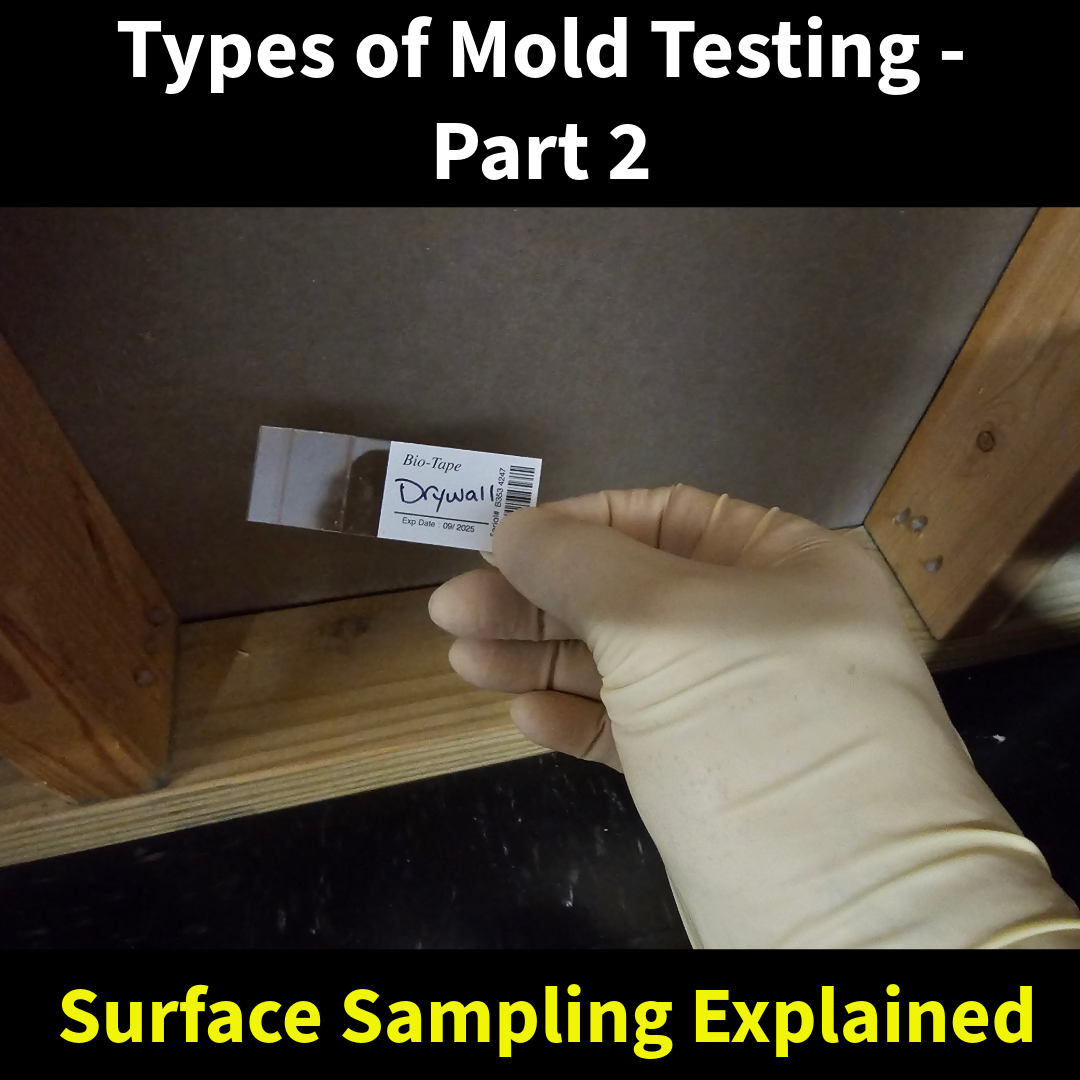
Mold Testing Part 2: Surface Sampling

What Is Surface Sampling?

While air testing measures spores floating in the air, surface sampling targets visible or suspected mold growth on specific materials. This method involves swabs, tape lifts, or bulk samples taken directly from the surface of walls, furniture, or building materials.

When Is Surface Sampling Needed?

  • Visible Spots or Stains – to confirm whether discoloration is mold or another substance.
  • After Water Damage – to verify whether mold has developed on building materials.
  • Post-Remediation Clearance – ensuring the affected areas are truly mold-free.
  • Hidden Suspicions – when air samples come back inconclusive but the area still looks questionable.

Different Methods of Surface Sampling

  • Swab Samples – cotton-like swabs collect material from suspicious areas.
  • Tape Lifts – adhesive tape lifts spores directly off surfaces for lab analysis.
  • Bulk Samples – actual pieces of contaminated material (like drywall) are sent to the lab for testing.

In some cases—such as disputes between landlords and tenants, insurance claims, or litigation—surface sampling provides a level of certainty that air testing cannot always guarantee. Because spores don’t always become airborne, an air sample might miss contamination that’s clearly visible on a surface. By taking a direct lift from the material itself, you know exactly what is present in that location.

This makes surface samples a powerful tool when clear, documented evidence is needed. Whether it’s a legal case, a landlord–tenant disagreement, or simply providing peace of mind, surface testing can deliver indisputable results that stand up to scrutiny.

Limitations of Surface Sampling

Surface tests don’t measure what’s in the air and can’t determine the overall air quality of the property. They also only represent the spot tested, not the entire room. That’s why professionals often use surface samples in combination with air testing for a complete picture.

Why Professional Sampling Matters

Knowing when to use surface testing—and how to interpret the results—isn’t always straightforward. At MSI, we’ve been conducting mold inspections and testing since 1998, and we know which situations call for air testing, surface testing, or both.

Takeaway

Surface sampling is a valuable tool, but it’s just one part of a complete mold inspection strategy. Trusting a certified professional ensures accurate results and the right plan of action for your property.

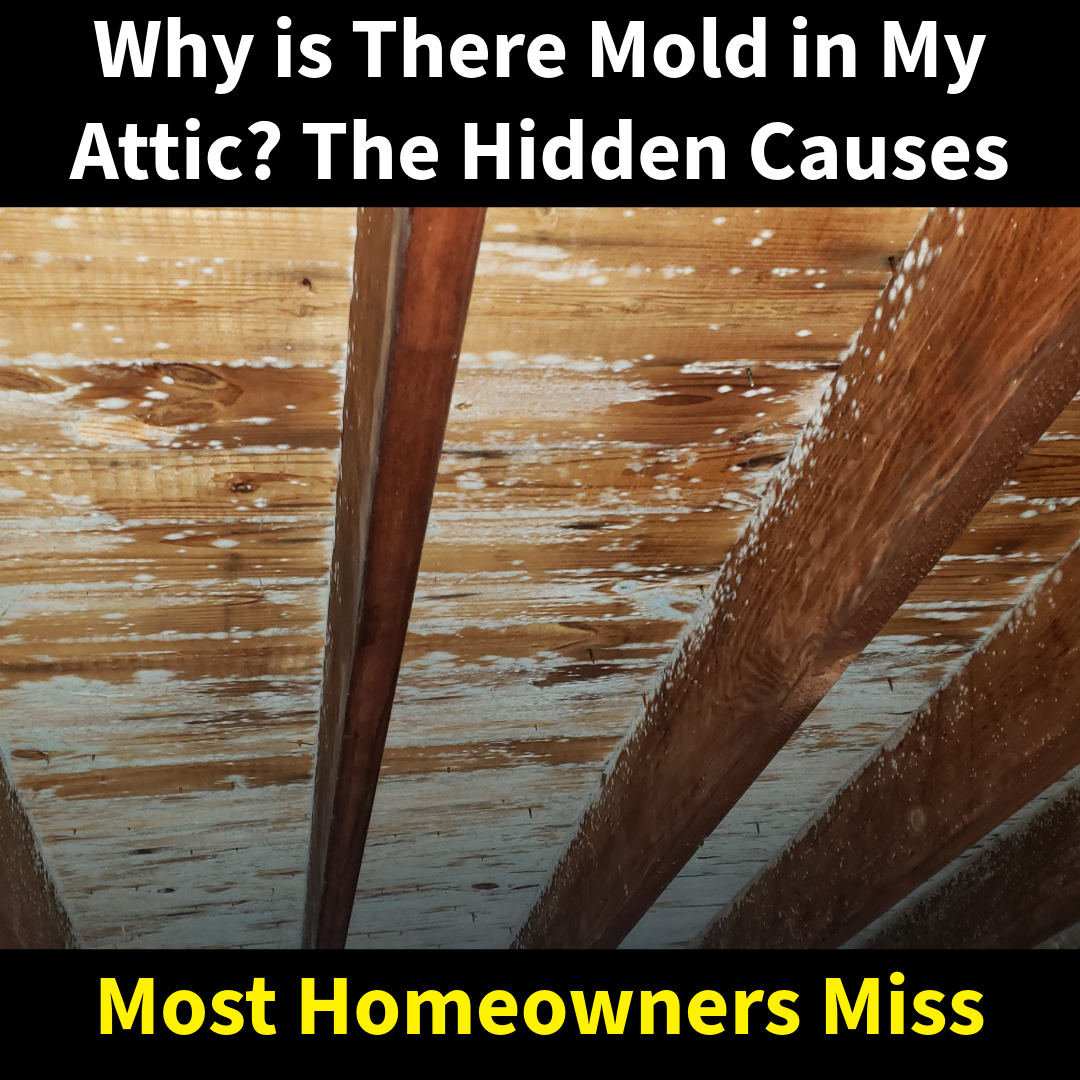
Why Is There Mold in My Attic? The Hidden Causes Most Homeowners Miss

Many homeowners are shocked to discover mold in their attic—especially when it’s a part of the home they rarely visit. But attic mold is more common than people realize, and it often forms slowly and silently until it becomes a serious problem. Here’s what might be feeding it—and what to look for before it spreads.

1. Roof Leaks You Never See

Even a small roof leak can allow moisture to enter the attic. Water may drip down slowly onto insulation or framing without ever staining the ceiling below—making it easy to miss until mold takes hold.

2. Poor Ventilation

Your attic needs proper airflow to stay dry. Ridge vents, soffit vents, and gable vents should work together to cycle air and remove moisture. Without it, humid air gets trapped—creating the perfect mold environment, especially during seasonal changes.

3. Over or Under Insulating

Too much insulation? It can block airflow and trap heat, leading to condensation. Too little insulation? Warm, moist air from the house rises into a cold attic and condenses on rafters. Either way, it fuels mold growth.

4. Bathroom Fans Venting Into the Attic

This is a big one. Bathroom exhaust fans should be vented outside the home—not into the attic. When they dump warm, humid air directly into the attic space, it creates moisture buildup fast, and mold is often the result.

5. Inconsistent Temperatures and Seasonal Condensation

Freezing winter air meeting warm interior heat leads to condensation on the wood structure—especially on nails, rafters, and sheathing. This repeated moisture cycle encourages mold spores to thrive.

A Word of Warning About Cheap Mold Jobs

Many restoration companies offer low prices because they simply paint over attic mold. It may look clean when they’re done, but the mold problem underneath is still active—and growing. Without fixing the moisture source or removing the contamination properly, the mold will return. And when it does, the next remediation will likely cost more and require more work to undo the shortcut.

How to Fix It (And Why It Matters)

Ignoring attic mold can lead to structural damage, poor indoor air quality, contamination of HVAC systems, and reduced home value. If you suspect attic mold, don’t rely on a quick bleach wipe or DIY fan trick. A professional inspection can uncover the source, assess the extent, and recommend a proper remediation and prevention plan.

At MSI, we’ve inspected hundreds of attic spaces and understand how mold starts—and how to stop it. Whether it’s ventilation issues, insulation mistakes, or improper exhaust fan setups, we find the cause and provide real solutions.

Buying a Home This Spring? Don’t Skip the Mold & Asbestos Inspection

Spring is the busiest time of year for real estate—and in today’s fast-moving housing market, buyers are often pressured to skip inspections just to stay competitive. But waiving a mold or asbestos inspection to win a bid can turn your dream home into a nightmare.

At MSI, we’ve seen too many homeowners move in, only to discover costly—and dangerous—issues lurking behind the walls. Here’s why a proper inspection is one corner you don’t want to cut.

Hidden Mold = Health Hazards + Big Repairs

Mold doesn’t care if your home looks move-in ready. Even beautiful, recently renovated houses can hide serious water damage or active mold growth behind fresh drywall. Leaky roofs, poor ventilation, or unfinished basements are common culprits.

Without a mold inspection, you could be signing up for:

  • Costly remediation work after move-in
  • Chronic allergies, asthma flare-ups, or other health issues
  • Insurance headaches if it’s classified as a “pre-existing” condition

Asbestos: Still Found in Homes Built Before the 1980s

You might think asbestos is a thing of the past—but it’s still found in many homes built before 1980, especially in:

  • Floor tiles and mastic
  • Pipe insulation
  • Popcorn ceilings
  • Old HVAC duct tape
  • Siding and roofing materials

If disturbed during renovations, asbestos can become airborne and dangerous to your health. And here’s the kicker: home sellers aren’t always required to test for it.

Skipping These Tests Could Cost You Thousands

A mold or asbestos problem isn’t just a health risk—it’s a financial one. Cleanup and remediation can easily run into the thousands. Worse, some mortgage lenders may require these issues be addressed before finalizing a loan.

For a fraction of your closing costs, you can avoid a massive financial surprise down the road.

Don’t Rely on the Seller’s Word—Get Your Own Testing

Even if the home “smells fine” or “looks clean,” these hazards can be invisible. Sellers often aren’t aware of issues—or may not disclose them if they’re doing a fast flip.

That’s where we come in. MSI has been testing homes for mold and asbestos since 1998. Our certified inspections are fast, thorough, and trusted by real estate professionals and attorneys alike.

Buying a Home? Book a Pre-Purchase Mold and Asbestos Inspection with MSI

Before you sign on the dotted line this spring, give yourself peace of mind. A quick inspection now can save you from major regrets later.

Mold Exposure or the Flu? How to Tell the Difference

With flu season in full swing and recent concerns about bird flu making headlines, it’s more important than ever to recognize the symptoms of illness correctly. Many people experience flu-like symptoms such as coughing, fatigue, and respiratory issues, but these can also be caused by mold exposure. Understanding the differences between seasonal flu, bird flu, and mold-related illness is crucial for protecting your health.

Similar Symptoms, Different Causes

Mold exposure, seasonal flu, and bird flu share overlapping symptoms, making it difficult to determine the cause of your discomfort. Here’s a breakdown:

  • Mold Exposure Symptoms:
    • Persistent coughing or wheezing
    • Nasal congestion or sinus irritation
    • Watery or itchy eyes
    • Skin rashes
    • Chronic fatigue or headaches
    • Worsening asthma or allergy symptoms
  • Seasonal Flu Symptoms:
    • Fever and chills
    • Body aches and muscle pain
    • Cough and sore throat
    • Fatigue
    • Runny or stuffy nose
    • Occasional nausea or vomiting (more common in children)
  • Bird Flu Symptoms (Avian Influenza):
    • High fever (above 100.4°F)
    • Cough and sore throat
    • Shortness of breath or difficulty breathing
    • Muscle aches
    • Conjunctivitis (pink eye)
    • In severe cases, pneumonia or respiratory distress

While seasonal flu and bird flu are viral infections that spread from person to person or through animal exposure, mold-related illnesses stem from environmental exposure. Long-term exposure to mold spores, especially in damp or water-damaged environments, can lead to ongoing respiratory issues and immune system complications.

How to Determine the Cause

  • If your symptoms persist for weeks and worsen in certain areas (like your home or office), mold exposure could be the culprit.
  • If you develop a high fever, severe body aches, and sudden fatigue, it’s more likely the flu or another viral infection.
  • If you’ve had contact with birds or poultry and experience severe respiratory symptoms, it’s important to seek medical attention immediately to rule out bird flu.

Why Mold Testing Is Critical

Because mold-related symptoms mimic those of viral illnesses, it’s easy to overlook environmental factors. If you’ve been experiencing persistent respiratory issues, headaches, or chronic fatigue, scheduling a professional mold inspection can help identify hidden mold problems in your home or workplace.

MSI has been performing mold testing since 1998, completing over 10,000 inspections. We are trusted as expert witnesses in mold-related court cases, ensuring that our assessments are thorough and reliable. Don’t let hidden mold affect your health—if you suspect a problem, take action today.

Protect Your Health

If you’re feeling unwell and aren’t sure whether it’s mold exposure, seasonal flu, or something more serious like bird flu, don’t ignore the signs. Pay attention to your symptoms, consider your environment, and when in doubt, consult both medical and environmental professionals. Identifying and addressing the cause of your symptoms can make all the difference in your health and well-being.

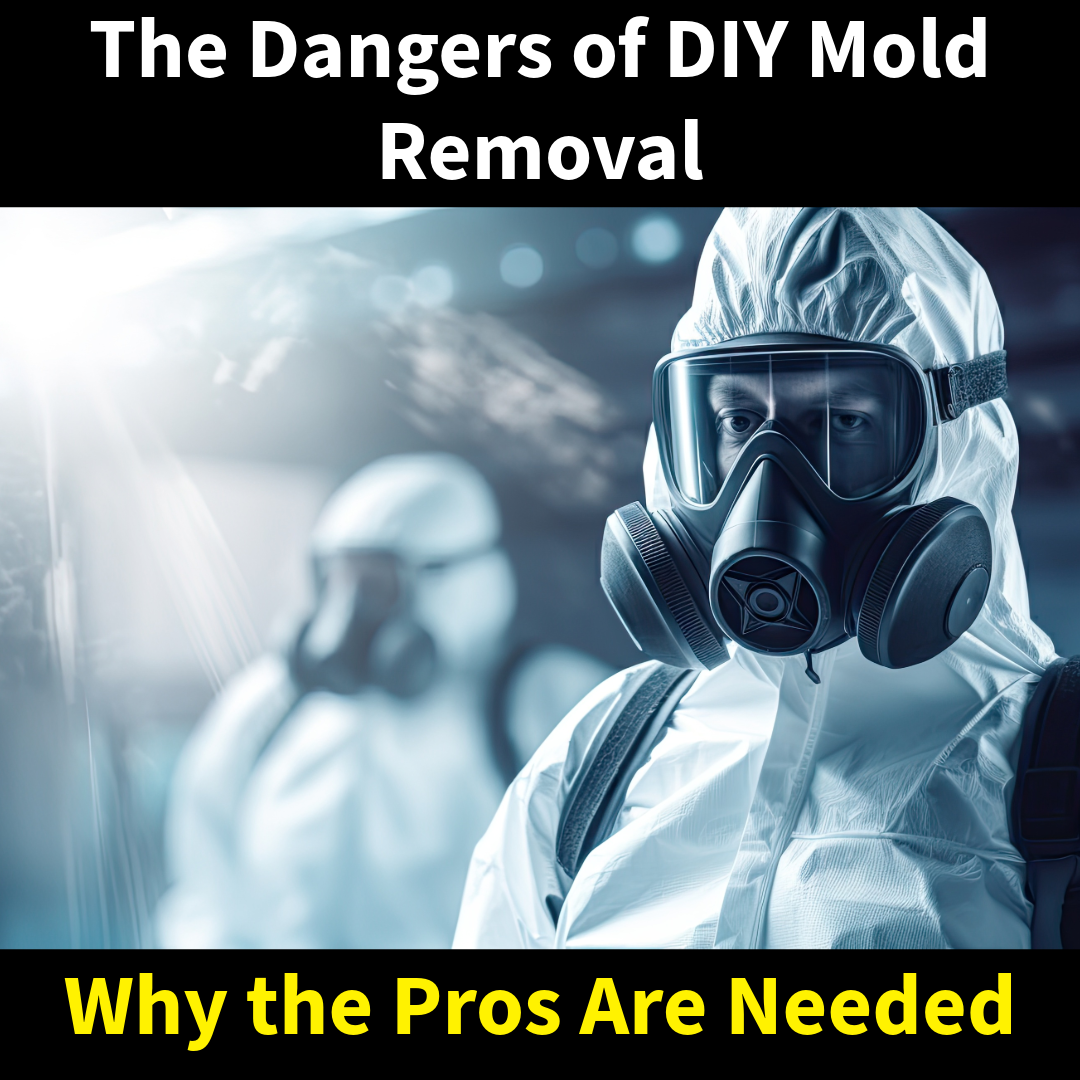
The Dangers of DIY Mold Removal

Mold can be an unwelcome intruder in any home or business, posing health risks and potentially causing significant structural damage. While tackling mold on your own might seem like a cost-effective solution, DIY mold removal often leads to more problems than solutions. Here, we’ll explore the dangers of DIY mold removal and explain why professional remediation is the safer, more effective choice.

The Risks of DIY Mold Removal

  1. Inadequate Identification of Mold Types Mold isn’t one-size-fits-all. Some molds, like black mold (Stachybotrys chartarum), are highly toxic and require specialized handling. Without proper training, it’s nearly impossible to identify the type of mold and its associated risks. Treating mold incorrectly can exacerbate the problem or expose you to harmful spores.
  2. Health Hazards Mold spores can cause respiratory issues, skin irritation, and other health problems, particularly in individuals with asthma, allergies, or weakened immune systems. Disturbing mold without proper protective equipment can release thousands of spores into the air, increasing exposure risks.
  3. Improper Removal Techniques Scrubbing mold with bleach or other household cleaners may appear to solve the problem, but these methods often only address surface growth. Mold can penetrate porous materials like drywall, carpeting, and wood, making it difficult to eliminate without specialized tools and techniques. Improper removal may leave behind spores, allowing mold to return and spread.
  4. Cross-Contamination Mold spores are microscopic and can easily travel through the air, spreading to other areas of your property during removal. Without containment measures, you risk turning a localized mold issue into a widespread infestation.
  5. Structural Damage DIY efforts often overlook hidden mold growth behind walls, under flooring, or in HVAC systems. Failure to address these areas can lead to long-term structural damage and costly repairs.

The Benefits of Professional Mold Remediation

  1. Accurate Mold Assessment Professionals use advanced testing methods to identify the type of mold and the extent of contamination. This ensures a targeted and effective remediation plan.
  2. Comprehensive Removal Professional remediation teams have access to industrial-grade equipment, such as HEPA vacuums, air scrubbers, and antimicrobial treatments, to ensure thorough mold removal. They also follow industry standards to safely eliminate mold from both visible and hidden areas.
  3. Health and Safety Trained technicians use proper protective gear and containment measures to minimize exposure to mold spores, protecting both themselves and your household or employees.
  4. Prevention of Future Growth Professionals address the root cause of mold growth, such as leaks or high humidity, to prevent recurrence. They can also provide guidance on moisture control and maintenance to keep your property mold-free.
  5. Peace of Mind Hiring a professional ensures the job is done right the first time, saving you time, money, and stress. You’ll have confidence knowing your property is safe and mold-free.

When to Call a Professional

If you notice signs of mold, such as a musty odor, discoloration on walls or ceilings, or unexplained health issues, it’s time to call in the experts. Mold Solutions & Inspections specializes in professional mold remediation, offering comprehensive services to restore your property and protect your health.

DIY mold removal might seem tempting, but the risks far outweigh the potential savings. Improper handling can exacerbate health problems, spread mold, and lead to costly repairs. Professional remediation provides a safe, effective solution to eliminate mold and prevent its return. When it comes to protecting your home or business, trust the experts to get the job done right. Contact Mold Solutions & Inspections today to schedule a consultation and take the first step toward a mold-free environment.

Winter Preparedness For Your Home or Business

As winter settles in, homeowners and businesses face unique challenges. From freezing pipes to poor ventilation causing mold growth, the cold season can take a toll on your property. At Mold Solutions & Inspections, we understand the importance of staying ahead of these risks to avoid costly repairs and health hazards.

Protecting Against Water Damage

One of the biggest winter threats is water damage caused by frozen pipes or ice dams. Here’s how to stay protected:

  • Insulate Pipes: Wrap exposed pipes in basements, crawl spaces, and attics to prevent freezing.
  • Clear Gutters and Downspouts: Blockages can lead to ice dams, which cause water to seep into walls and ceilings.
  • Check for Leaks: Inspect windows, doors, and roofs for potential entry points for water.

If water damage does occur, our team at Mold Solutions & Inspections offers 24/7 water damage restoration services to minimize disruption.

Preventing Fire Hazards

Winter also brings an increased risk of fire hazards, especially with heating equipment. Stay safe by:

  • Using Space Heaters Safely: Keep heaters away from flammable materials and never leave them unattended.
  • Cleaning Chimneys and HVAC Systems: Built-up debris can ignite and cause house fires.
  • Inspecting Holiday Decorations: Overloaded electrical outlets or frayed wires from holiday lights can spark fires.

In the unfortunate event of fire damage, we specialize in fire and smoke cleaning to restore your property quickly.

Addressing Mold and Air Quality Concerns

Winter often means closed windows and poor ventilation, which can lead to mold growth and unhealthy indoor air quality. Combat these issues by:

  • Controlling Humidity: Use dehumidifiers in basements, crawl spaces, and poorly ventilated areas.
  • Inspecting for Mold: Look out for musty odors or visible mold, especially after water damage.
  • Scheduling Mold Testing: If you suspect mold, our expert team can conduct thorough testing and provide solutions.

Remember, untreated mold can affect not only your property but also your health. Mold Solutions & Inspections offers professional mold testing and remediation to keep your home or business safe.

Be Ready for Emergencies

Despite the best precautions, disasters can strike. That’s why having a reliable partner like Mold Solutions & Inspections is crucial. We offer services like:

  • Water Damage Restoration
  • Fire and Smoke Cleaning
  • Biohazard Cleanup
  • Crime and Trauma Scene Cleanup
  • Asbestos Testing

Conclusion

Winter doesn’t have to be a season of worry. By taking proactive steps to protect your property and partnering with experts like Mold Solutions & Inspections, you can ensure a safer, hassle-free season. If you need assistance or want to schedule an inspection, contact us today. Let us help you weather the winter without worry!