
24/7 Commercial Water Damage Remediation
In a commercial water loss, the problem isn’t just what’s wet. It’s what the water damage prevents your organization from doing.
- IICRC-Certified Water Damage Specialists
- Advanced Moisture Evaluation & Structural Drying
- Direct Insurance Claims Assistance
- 28+ Years of Water Damage Experience
Because MSI has specialized in mold inspection and remediation since 1998, we don’t guess when your building is dry. We measure it.
Contact Our Certified Experts
Trust Our 5-Star Rating


In a time when it can be hard to get service providers to even call you back, MSI is a real standout. No one wants to deal with water damage or mold, but knowing this team is out there doing high‑quality, reliable work has been a game changer for us as homeowners.



They were able to start the remediation within a week of contacting them, which gave us huge peace of mind. The team was professional, respectful of our home, and explained what they were doing each step of the way. Knowing our baby’s health and safety were a priority to them made such a difference.
Should we need further remediation, we will definitely continue using them. I’m so grateful we found MSI and would recommend them to anyone who needs mold remediation.
Commercial Water Damage Remediation That Protects Your Operations
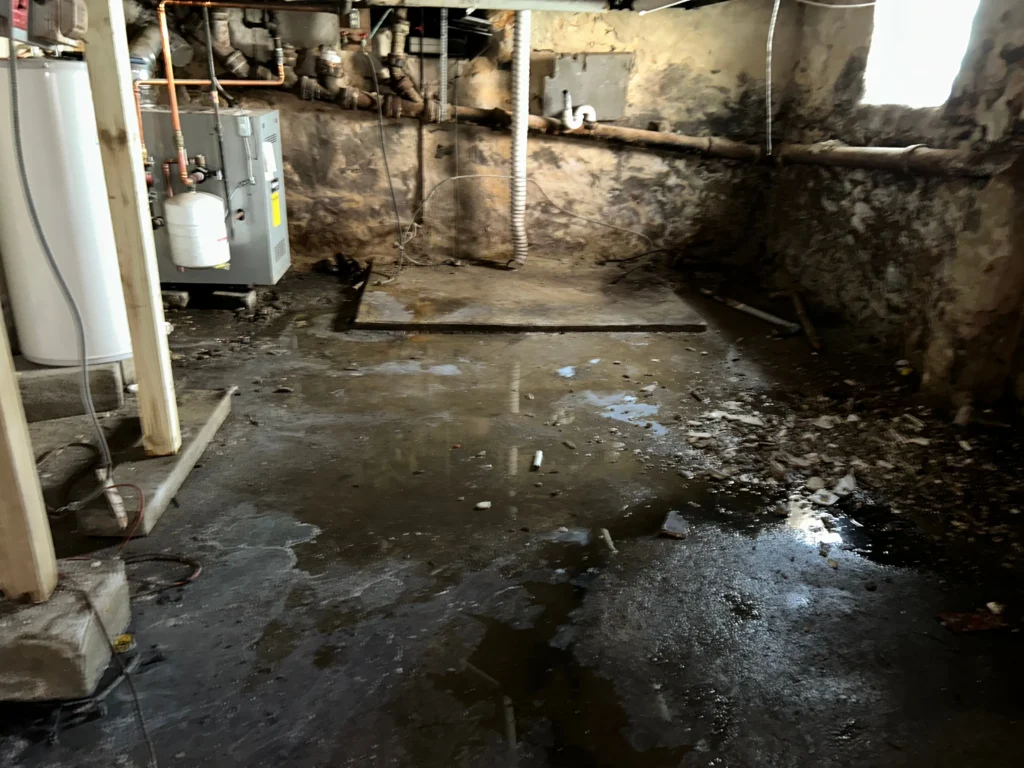
When a commercial water loss hits, the problem isn’t just what’s wet. It’s what the damage stops your organization from doing. A failed pipe can close offices. A sprinkler discharge can affect several floors. A roof leak can disrupt tenants. A flooded mechanical room can threaten your entire operation. And unnecessary demolition can create almost as much disruption as the water itself.
Mold Solutions & Inspections (MSI) approaches commercial water damage remediation with two priorities: controlling the water damage and understanding its impact on your building. Our IICRC-certified technicians identify affected areas, find moisture migration, extract excess water, evaluate materials, establish controlled drying, and document drying progress.
We don’t just place equipment and wait. We make informed mitigation decisions, reduce unnecessary disruption and verify that affected materials are actually drying.
A Commercial Water Loss Is an Operational Problem
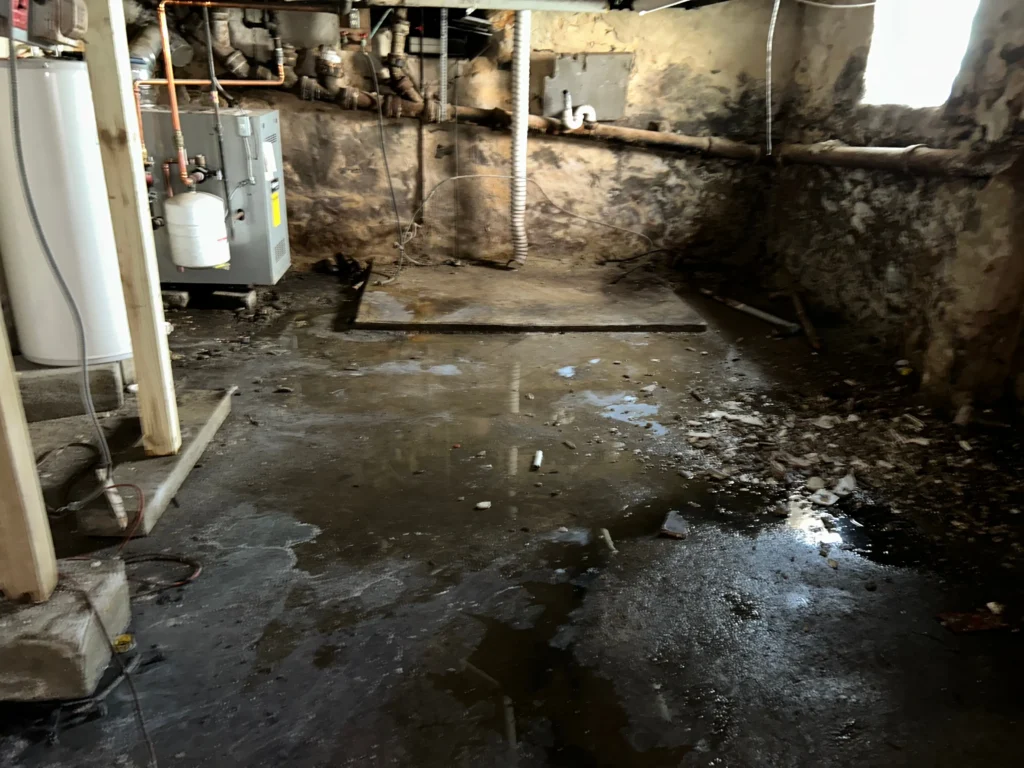
Picture a pipe failure overnight in a commercial property. By morning, water has reached two offices, a conference room, a corridor, ceiling materials on the floor below, carpet, drywall, electrical areas and tenant contents.
The obvious response might be “dry everything.” But management needs better answers:
- How far did the water travel?
- Which spaces are actually affected?
- Can unaffected areas stay operational?
- What materials need removal, and what can be dried in place?
- Is drying actually progressing?
- What needs to happen before spaces return to normal use?
That’s the difference between basic water cleanup and true commercial water damage remediation.
The MSI Difference: Define the Loss Before Expanding the Disruption
A commercial water loss creates pressure to act fast. But speed without information leads to unnecessary disruption. MSI uses moisture detection to establish the real extent of the loss, because the visible waterline rarely defines the affected area.
Water can migrate under flooring, behind baseboards, into drywall, through wall cavities and between floors while nearby areas stay completely dry. Knowing both matters. Our goal is to identify the affected area accurately, so we don’t assume the whole building is damaged or overlook moisture simply because it isn’t visible.
Our 8-Step Commercial Water Damage Remediation Process
Every step has a purpose: understand the loss, control it, protect operations and prove the building is dry.
Understand What Happened
We start by determining the nature of the loss. Commercial water damage may result from:
- Burst pipes and plumbing failures
- Sprinkler system discharges
- Roof leaks and storm damage
- HVAC and condensate failures
- Appliance, equipment or water heater leaks
- Sewer backups
- Groundwater intrusion or flooding
The source shapes the response. A clean-water plumbing failure raises very different concerns than a sewage backup or exterior floodwater event.
Identify Immediate Priorities
In a commercial environment, planning has to consider more than building materials. We evaluate the relationship between the water and your occupied areas, tenant spaces, customer areas, equipment, inventory, critical rooms, access routes, business operations and adjacent unaffected spaces.
This tells us where immediate attention is required. The largest puddle isn’t always the highest operational priority.
Find the Moisture
What you can see is only part of the picture. MSI uses professional moisture-detection methods to evaluate affected and potentially affected materials like drywall, flooring, subflooring, ceiling systems, insulation, wood framing, wall cavities, cabinets, concrete, adjacent rooms and areas on floors below.
This builds a more defensible scope. We don’t treat the edge of the puddle as the edge of the project.
- Affected area — requires mitigation
- Adjacent dry area — may remain available for use
- Wet wall assembly — requires evaluation
- Dry neighboring office — shouldn’t face unnecessary disruption
- Wet flooring — may need drying or removal
- Unaffected flooring — shouldn’t automatically join the demolition scope
Better information means better operational decisions.
Extract Standing & Excess Water
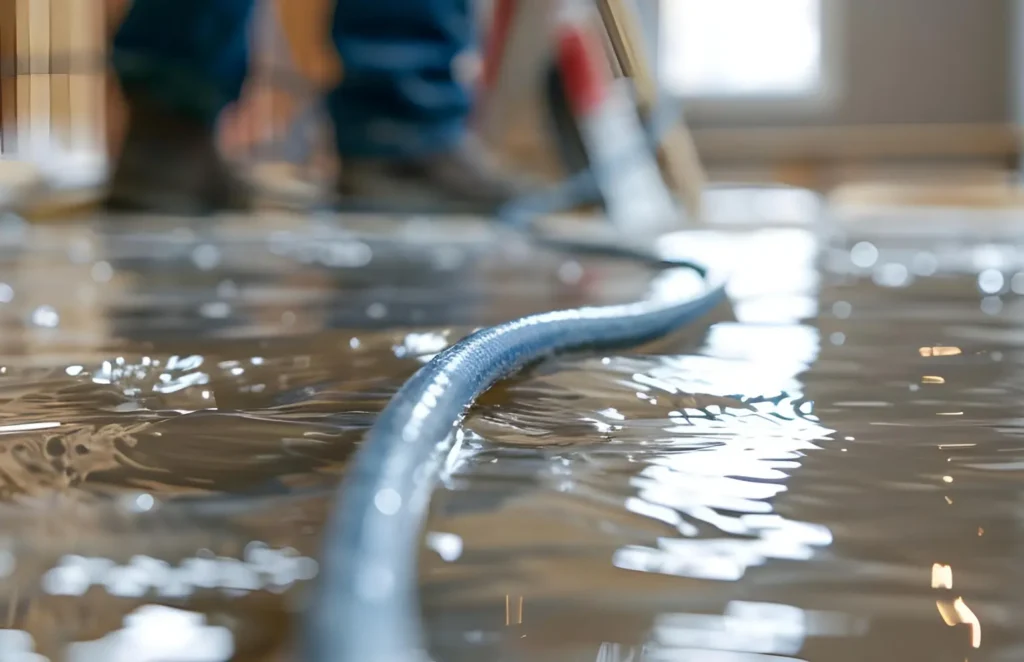
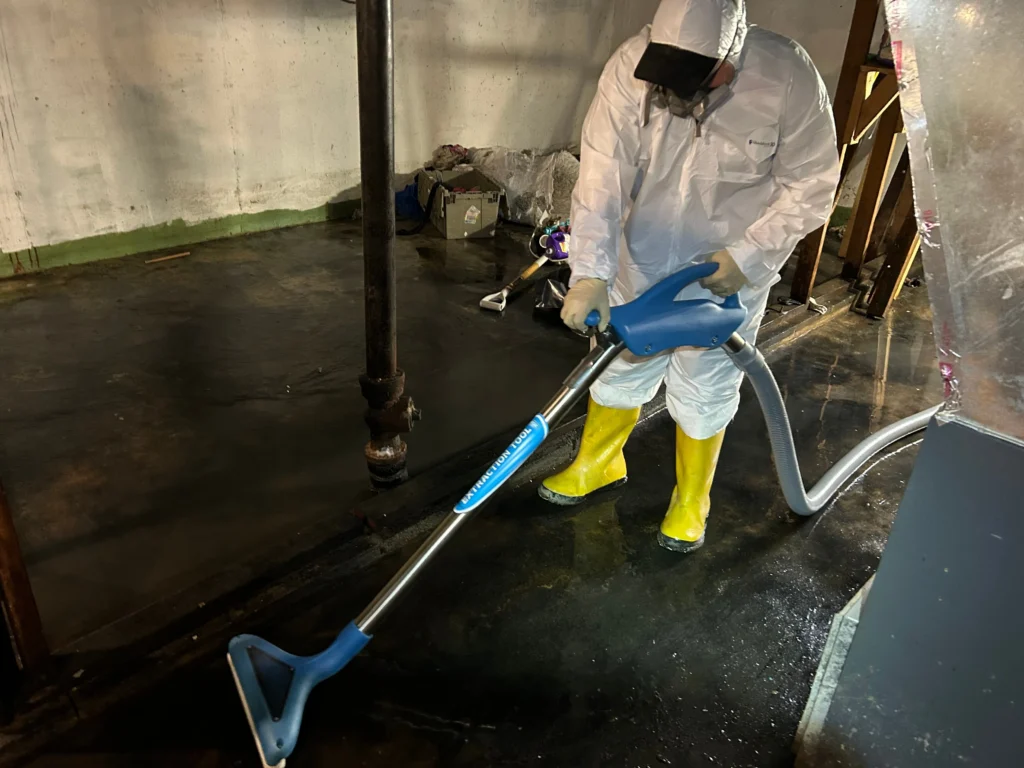
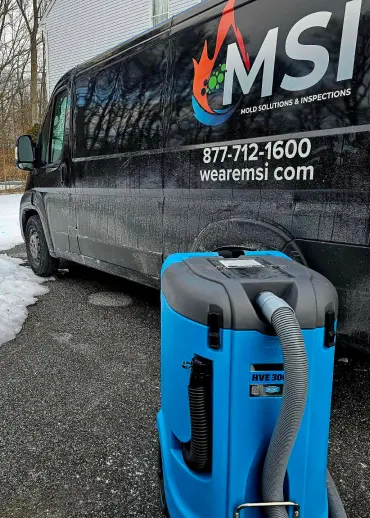
When appropriate, MSI uses professional extraction equipment to remove standing and excess water. Fast extraction significantly reduces the moisture that later has to be removed through evaporation and dehumidification.
But extraction isn’t the finish line. A dry-looking floor doesn’t prove the assembly beneath it is dry, which is why we follow extraction with moisture evaluation and structural drying.
Evaluate What Can Remain
One of the most consequential decisions in commercial water damage remediation is determining what actually needs to be removed. Remove too little and you leave unresolved moisture. Remove too much and you increase disruption, reconstruction, downtime, cost and tenant impact.
MSI weighs the water source, potential contamination, material type, saturation, duration of exposure, material condition, accessibility and the ability to effectively dry each material. Our goal isn’t maximum demolition. It’s an appropriate scope based on actual conditions.
Dry in Place When Appropriate. Remove When Necessary.
Commercial buildings contain complex assemblies. Carpet may sit over concrete. Drywall may conceal insulation. Walls may hold utilities. Ceiling systems may provide access to mechanical components. Different materials respond differently to water, so there’s no automatic answer to “Does this need to come out?”
Where appropriate, drying materials in place limits disruption. Where removal is necessary, selective access lets us address the affected assembly without tearing out more than needed.
Â
Establish Controlled Structural Drying
Once standing water and materials requiring removal have been addressed, MSI establishes controlled drying conditions using air movers, dehumidifiers, moisture meters and atmospheric monitoring equipment.
Equipment placement follows the actual drying requirements of the project. But equipment is only one part of drying. The real question is whether the materials are responding.
Monitor the Drying Process
Commercial drying should never be “set equipment, wait several days, remove equipment.” MSI monitors moisture and environmental conditions to confirm drying is progressing. If readings aren’t moving as expected, we investigate why, checking for concealed moisture, insufficient airflow, saturated materials, inaccessible wet areas, environmental conditions or continued water intrusion.
We then adjust the strategy based on the data. Equipment tells you what’s running. Measurements tell you what’s working.
Document the Project
Commercial water losses involve multiple stakeholders, and documentation creates a shared record. Depending on the project, MSI documentation may include photographs, affected areas, moisture readings, drying records, equipment information, material-removal details, work performed and drying progress.
That record supports clear communication between property ownership, management, tenants, contractors and insurance representatives.
Minimize Disruption, Not Just Water
Commercial remediation has a different success metric than residential cleanup. Getting the building dry matters. So does understanding how the work affects operations while drying happens.
Where conditions allow, our planning may consider maintaining access to unaffected areas, isolating work zones, sequencing work, protecting occupied spaces, coordinating around business hours, prioritizing operationally important areas, managing equipment placement and coordinating with facility personnel.
Not every water loss lets normal operations continue. But every project benefits from understanding your priorities. The question isn’t only “How quickly can we dry this?” It’s also “How intelligently can we manage the disruption while we do it?”
Common Commercial Water Loss Scenarios
Commercial Water Extraction
01
When significant standing water is present, rapid extraction is a critical first step. MSI addresses water from broken supply lines, sprinkler discharges, mechanical failures, roof leaks, storm events and equipment leaks. After extraction, the investigation continues; water may remain inside flooring systems, walls, insulation and other materials. That’s why we connect extraction and structural drying.
Commercial Structural Drying
02
A space can look normal while elevated moisture remains inside building materials. MSI’s drying process focuses on measurable conditions: we establish baseline readings, monitor affected materials, track progress, adjust when necessary and evaluate when appropriate drying goals are reached. Don’t guess whether the building is dry. Measure it.
Multi-Floor Water Damage
03
Commercial losses don’t always stay on one floor. A plumbing or sprinkler failure upstairs can travel through floor assemblies, ceiling systems, wall cavities, utility penetrations, shafts and adjacent rooms. Visible damage below may represent only part of the water path, so MSI evaluates both the vertical and horizontal spread rather than assuming the loss is confined to the source.
Sprinkler System Water Damage
04
A sprinkler discharge can release a substantial amount of water across carpet, flooring, drywall, ceiling systems, furniture, contents, multiple rooms and lower floors. Once the fire-protection system has been appropriately addressed, MSI evaluates and mitigates the resulting damage—understanding the full extent of moisture before any premature demolition or reconstruction begins.
Commercial Roof Leak Water Damage
05
Large commercial roofs make leak locations hard to interpret. Water can enter at one point and travel along the roof assembly or structure before appearing inside. A ceiling stain doesn’t necessarily identify where the roof failed or define the full extent of interior moisture. A qualified roofing contractor addresses the roof; MSI addresses the resulting interior water damage. Fix the source, then follow the water.
Commercial Sewage & Contaminated Water Losses
06
When a loss involves sewage, drain backups or contaminated exterior floodwater, the strategy changes. Contamination influences work-zone controls, personal protection, cleaning procedures, material-removal decisions, drying and occupancy considerations. These losses shouldn’t be treated as ordinary clean-water events, so MSI evaluates the water source and affected materials before developing the approach.
Built for the People Who Manage Buildings
Property Managers: You Need Information, Not Just Equipment
When tenants start calling, you need real answers, not “we have 25 fans running.” You need to know which units are affected, which aren’t, where moisture is still elevated, what’s been removed, what’s being dried, whether drying is progressing and what happens next. That’s why MSI emphasizes moisture assessment and project documentation. The more stakeholders involved, the more valuable clear information becomes.
Facility Managers: We Work With the Building, Not Around It
Facility teams often know the building better than anyone: mechanical systems, shutoffs, access points, sensitive areas, operational priorities, building history and previous water events. That knowledge is valuable during commercial water damage remediation. MSI coordinates with facility personnel and appropriate trades so mitigation decisions reflect both the moisture conditions and the realities of your building.
Commercial Property Types We Serve
MSI provides commercial water damage remediation for a wide range of properties:
- Office buildings and retail properties
- Multifamily buildings and apartment communities
- Educational facilities
- Healthcare and professional offices
- Warehouses and industrial properties
- Hospitality properties
- Houses of worship
- Managed commercial properties
Every facility operates differently, and your mitigation plan should recognize that.
Contents & Equipment Coordination
Commercial water damage often affects more than the building. A project may involve office furniture, computers, documents, inventory, shelving, tenant contents and specialized equipment. Some items need to move simply to provide access to wet building materials. Others require specialized evaluation, cleaning, drying or storage.
MSI coordinates contents needs as part of the larger mitigation project. Contents management should support the plan, not become a separate source of disruption.
Why MSI's Mold Expertise Matters in Commercial Buildings
Some losses are discovered immediately. Others aren’t. A slow roof leak may sit above a suspended ceiling. A pipe may leak inside a wall. Condensation may affect concealed materials. A previous event may have been repaired cosmetically without fully addressing the moisture.
Because MSI specializes in both water damage and mold inspection and remediation, our technicians understand the consequences of overlooked moisture. We don’t only ask “What’s wet?” We also ask “Could something else be wet that we haven’t found yet?” Hidden moisture doesn’t become less important because a building is commercial.
Commercial Water Damage & Insurance Coordination
Commercial losses can involve building ownership, property management, tenants, insurance carriers, adjusters, brokers, contractors and facility teams. Clear documentation helps everyone work from a consistent understanding of the loss.
MSI documents applicable aspects of the project, including affected areas, photographs, moisture conditions, drying activities and work performed. MSI documents the mitigation. Your insurance carrier determines coverage.
Commercial Water Damage Remediation FAQs
What is commercial water damage remediation?
It involves evaluating the loss, removing excess water, addressing affected materials, establishing structural drying, monitoring moisture and documenting the process, so decisions are based on data, not guesswork.
How quickly should commercial water damage be addressed?
Promptly. Moisture can migrate beyond the visibly affected area and into porous or concealed materials, so early evaluation helps limit the spread.
Can our business stay open during remediation?
It depends on the location, extent and type of loss, contamination concerns and operational requirements. MSI helps identify affected and unaffected areas so you can make informed decisions.
Does all wet drywall need to be removed?
No. Material decisions depend on the water source, contamination, saturation, condition, accessibility and the ability to effectively dry the material.
How does MSI determine where water traveled?
We use professional moisture-detection methods and measurements to evaluate affected and potentially affected building materials.
Can you dry commercial carpet?
Whether carpet can remain depends on the water source, condition, flooring assembly and extent of the loss.
How do you know when a commercial building is dry?
MSI monitors moisture conditions and drying progress rather than relying on appearance, touch or an arbitrary number of drying days.
Can MSI handle multi-floor water damage?
Yes. Water migrates vertically and horizontally through commercial assemblies, so we evaluate moisture beyond the immediate source area.
Does MSI handle mold if it's discovered?
Yes. We provide mold inspection and remediation in addition to water-damage mitigation.
Does MSI perform reconstruction?
Our primary role is mitigation, drying and mold-related services. Reconstruction can be coordinated separately after affected areas have been appropriately addressed.
Can MSI work with our insurance company?
MSI provides applicable documentation regarding the mitigation project. Coverage and claim decisions remain with the carrier.
Don't Measure a Commercial Water Loss by the Number of Fans
Measure it by what you know. Where did the water go? What materials are affected? What can remain? What needs to be removed? Which areas can keep operating? Is the building actually drying?
That’s how MSI approaches commercial water damage remediation:
When you need dependable commercial water damage remediation backed by real data and mold expertise, trust the team that investigates every path the water took.
Mold Solutions & Inspections (MSI)
- Mold Solutions & Inspections (MSI)
- 24/7 Emergency Sewage Backup Response
- IICRC-Certified Technicians
- Water Damage & Mold Specialists
- 27+ Years of Experience | 9,000+ Projects
Commercial Water Emergency? Understand the damage. Control the disruption. Verify the dry.
CALL MSI FOR 24/7 COMMERCIAL WATER DAMAGE RESPONSE