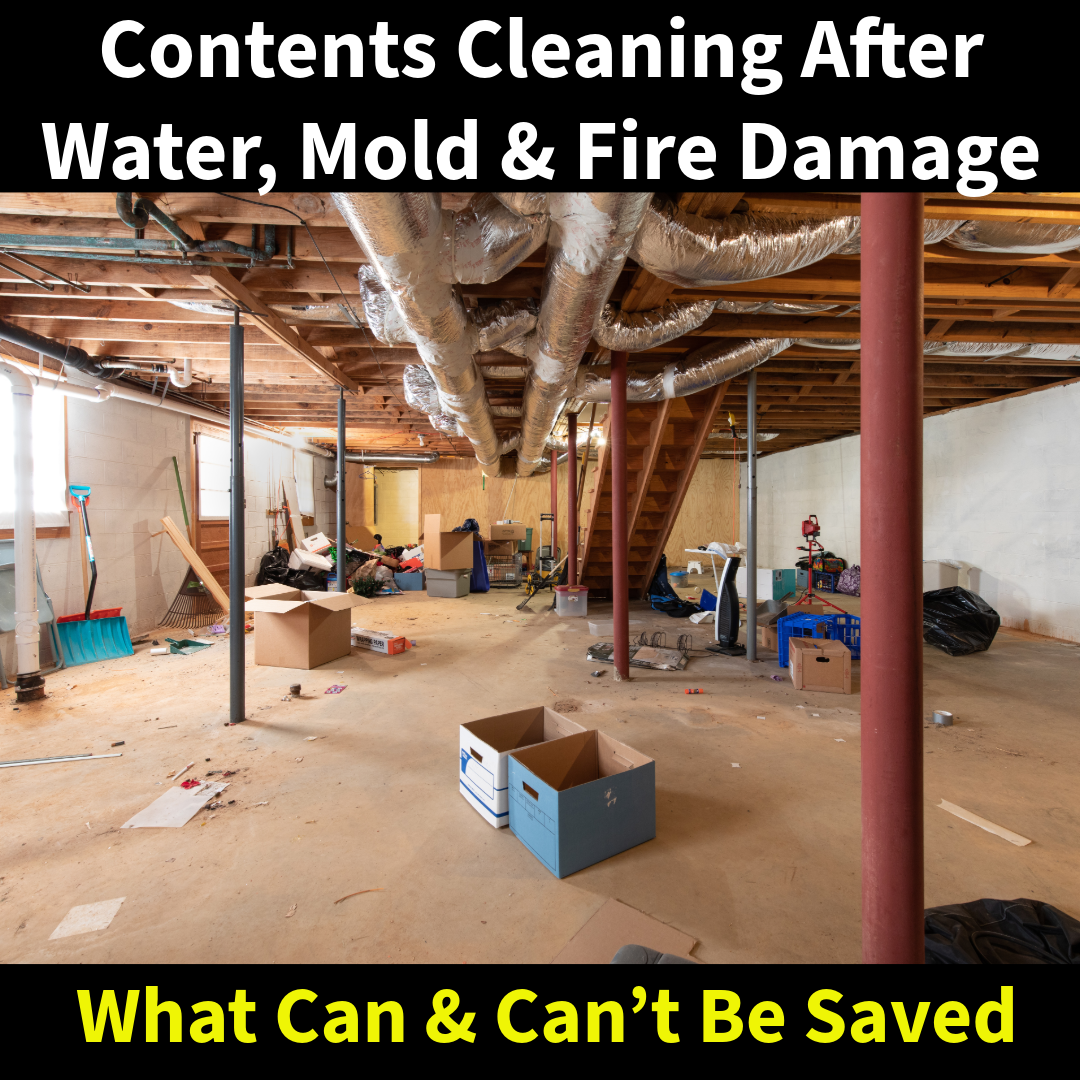
When a home or building is damaged by water, mold, or fire, the focus often goes straight to structural repairs. What’s frequently overlooked is the condition of the contents inside the space—furniture, personal belongings, electronics, documents, and other items that may be affected even if they don’t appear visibly damaged.
Contents cleaning is a critical part of the recovery process and can make a significant difference in both restoration costs and long-term indoor safety.
Why Contents Are Affected Even When Damage Looks Limited
Water, smoke, and mold don’t stay confined to one area. Moisture migrates, smoke travels through air pathways, and mold spores spread easily. As a result, contents throughout a home or building may be impacted even if the source of damage was isolated.
Items can absorb contaminants, odors, and moisture without showing immediate signs, which is why professional evaluation matters.
Contents Affected by Water Damage
Water damage can impact contents quickly, especially when moisture is allowed to sit or migrate.
Commonly affected items include:
- Upholstered furniture and mattresses
- Area rugs and carpeting
- Paper documents and books
- Clothing and textiles
- Wood furniture and cabinetry
- Electronics and appliances
Even clean water can cause damage if drying is delayed, and contaminated water introduces additional safety concerns.
Contents Affected by Mold Exposure
Mold-related damage isn’t always visible. Contents stored in damp or poorly ventilated areas can absorb moisture and spores over time.
Items often impacted by mold exposure include:
- Cardboard boxes and stored belongings
- Fabric items and soft goods
- Books, artwork, and paper materials
- Porous furniture and décor
In some cases, contents may be salvageable after proper cleaning and drying. In others, removal may be necessary to prevent recontamination.
Contents Affected by Fire and Smoke Damage
Fire damage affects more than what the flames touch. Smoke and soot can travel throughout a structure, leaving residues that continue to cause damage if not properly addressed.
Fire-related contents issues often involve:
- Smoke odor absorption in fabrics and furniture
- Soot residue on surfaces and electronics
- Corrosive damage to metals and wiring
- Contamination of HVAC-distributed items
Deodorizing alone is rarely sufficient without proper cleaning and evaluation.
What Determines Whether Contents Can Be Saved
Whether an item can be cleaned and restored depends on several factors, including:
- The type of material (porous vs. non-porous)
- The extent and duration of exposure
- The type of damage (water category, mold growth, smoke residue)
- Health and safety considerations
Professional assessment helps the property owner make informed decisions instead of guessing or discarding items unnecessarily.
Why Contents Cleaning Should Happen Before Rebuilding
Cleaning or removing affected contents is often necessary before repairs or reconstruction begin. Leaving contaminated or moisture affected items in place can compromise restoration work and contribute to ongoing odors, mold growth, or indoor air quality issues.
Proper sequencing helps ensure the space is truly clean and safe before moving forward.
Key Takeaways
Contents cleaning is an essential part of recovery after water damage, mold exposure, or fire. What can be saved and what can’t, should be determined through careful evaluation, not assumptions.
Addressing contents properly helps protect health, preserve valuable belongings, and support a successful restoration process.