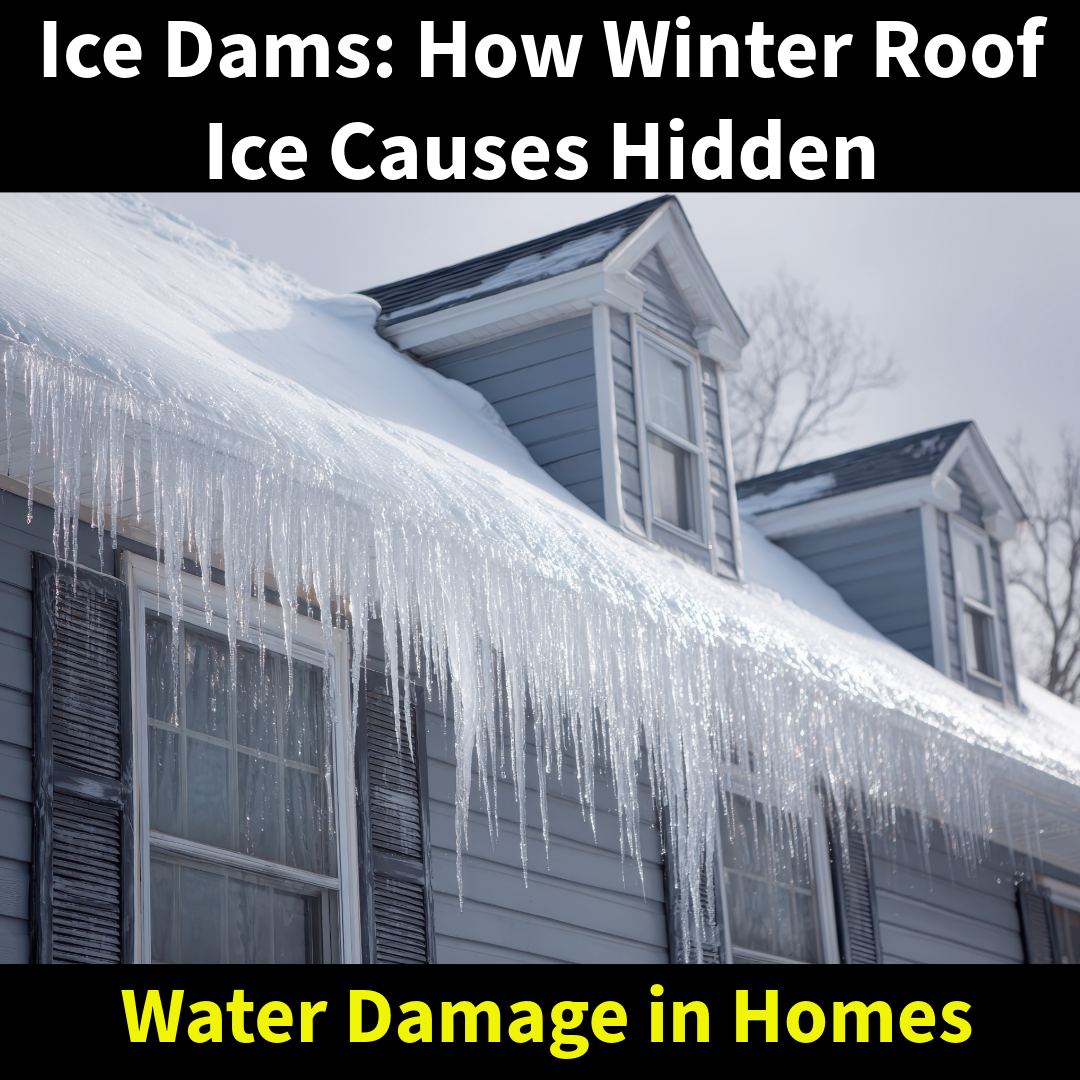
Ice Dams: How Winter Roof Ice Causes Hidden Water Damage in Homes

When temperatures drop and snow starts piling up, most homeowners worry about frozen pipes. But one of the most common and overlooked winter water damage problems actually starts on the roof: ice dams. Ice dams may look harmless from the outside, but they’re one of the leading causes of hidden water damage during freezing weather—especially in older homes and poorly insulated houses.

An ice dam forms when:

  • Snow melts on a warmer section of the roof
  • Water flows downward toward colder roof edges
  • The water refreezes, creating a ridge of ice

Once that ice ridge forms, melting snow has nowhere to go. Instead of draining off the roof, water backs up underneath shingles and slowly works its way into the home.

The damage from ice dams is rarely dramatic at first. That’s what makes them dangerous.

Common problems we see include:

  • Water seeping into attic insulation
  • Moisture soaking roof decking
  • Stains forming on ceilings or walls
  • Wet drywall behind finished surfaces
  • Mold growth weeks or months later

By the time homeowners notice visible signs, the damage is often already extensive.

Ice dam leaks don’t behave like typical roof leaks. They:

  • Occur during freezing weather
  • Stop when temperatures drop again
  • Reappear during thaws
  • Leave no obvious roof damage

Because of this, many homeowners assume the problem “went away” when in reality the moisture is trapped inside walls, ceilings, or insulation.

Some properties are more vulnerable than others:

  • Older homes with uneven insulation
  • Homes with finished attics
  • Houses with poor attic ventilation
  • Roofs with multiple valleys or dormers
  • Homes with snow-covered gutters

If warm air is escaping into the attic, it increases snow melt and dramatically raises the risk of ice dams.

Watch for:

  • Brown or yellow ceiling stains
  • Peeling paint near exterior walls
  • Dripping during daytime thaws
  • Musty odors after snow melts
  • Visible ice buildup along roof edges

These are warning signs that water is already getting inside.

Winter water damage often goes unnoticed until spring. By then:

  • Wet materials have stayed damp for weeks
  • Mold has time to develop inside walls or ceilings
  • Repairs become more invasive and expensive

This is why winter water damage frequently turns into a mold problem months later, even when the leak seemed minor.

  • Do not chip ice off your roof (this can cause more damage)
  • Avoid ignoring stains or minor drips
  • Document any visible water intrusion
  • Have the area properly inspected for hidden moisture

Professional moisture detection is often the only way to confirm the full extent of ice dam water damage.

Prevention focuses on controlling heat and moisture:

  • Improve attic insulation
  • Seal air leaks into the attic
  • Ensure proper roof ventilation
  • Keep gutters clear before winter
  • Address uneven roof temperatures

These steps help stop ice dams from forming—and prevent recurring winter water damage.

Ice dams are one of the most deceptive winter hazards homeowners face. They don’t flood basements or burst pipes overnight—but they quietly cause serious water damage that often goes unnoticed until it’s costly to fix. If you’ve experienced ice buildup, ceiling stains, or unexplained moisture during freezing weather, it’s worth taking a closer look before small winter issues turn into major repairs.

What to Check in Your Home After a Winter Storm

Winter storms can leave behind more than snow and ice. Freezing temperatures, heavy snowfall, and thawing conditions often cause hidden water damage that isn’t immediately visible once the storm passes. Many homeowners don’t realize there’s a problem until days—or even weeks—later, when leaks, staining, or mold appear. Taking time to check key areas of your home after a winter storm can help catch water damage early and prevent more serious issues.


Freezing temperatures can stress plumbing systems, especially pipes located in exterior walls, basements, crawlspaces, garages, and other unheated areas.

After a winter storm, pay attention to:

  • Changes in water pressure
  • Unusual noises when water is running
  • Slow leaks around sinks, toilets, or appliances
  • Damp spots on walls or ceilings near plumbing lines

Even pipes that did not fully burst may have small cracks that begin leaking once temperatures rise.


Snow accumulation and freeze-thaw cycles can lead to roof leaks and ice dam formation. Water intrusion from above often shows up first on ceilings or in attic spaces.

Check for:

  • Discoloration or staining on ceilings
  • Peeling paint or bubbling drywall
  • Damp insulation in attic areas
  • Water marks near attic access panels

These signs may indicate slow roof leaks that started during or after the storm.


Basements and crawlspaces are especially vulnerable after winter storms due to frozen pipes, foundation seepage, and melting snow around the home.

Look for:

  • Standing water or damp concrete
  • Musty or damp odors
  • Wet insulation or exposed framing
  • Water around sump pumps or floor drains

Because these areas are often unfinished, moisture problems can go unnoticed without a careful inspection.


Ice dams commonly form along roof edges when snow melts and refreezes. This can force water under shingles and into the home.

After a storm, check for:

  • Large icicles along roof edges
  • Ice buildup in gutters
  • Water stains on exterior siding
  • Drips or leaks near exterior walls

Roof-related water damage often appears inside the home long after the snow has melted.


Winter water damage is often hidden. Heating systems may dry surfaces while moisture remains trapped inside walls, insulation, and flooring. Without proper moisture detection, damage can continue to spread even after conditions improve. Early identification can help prevent mold growth, structural damage, and costly repairs. Painting over leaks especially on drywall is a mistake that could be costly later, as mold will continue to develop on the backside of the drywall and in the edn require more mold remediation.


If you notice any signs of water intrusion after a winter storm—or if your home experienced frozen pipes, roof snow buildup, or recent thawing—calling a professional promptly allows for quick assessment and documentation. Fast response can make a significant difference in limiting damage and preventing long-term issues. Putting it off for later will only cost more in the long run.


Winter storms don’t always cause immediate or obvious damage. Taking the time to inspect key areas of your home after freezing temperatures and snowfall can help catch problems early and avoid bigger issues down the road. When in doubt, a professional inspection can provide peace of mind and ensure hidden moisture isn’t left behind. And when moisture does occur, having proper water damage restoration completed will save you time, money and even larger problems down the road.

Freezing Temperatures and Snow: The Hidden Water Damage Homeowners Miss

Over this past weekend, much of the region experienced significant snowfall, with up to 6 inches reported in parts of Philadelphia, Delaware County, Bucks County and Chester County, including West Chester, Newtown Square, Media, New Hope and surrounding communities. While most homeowners were focused on clearing driveways and staying warm, freezing temperatures and heavy snow can quietly cause hidden water damage inside homes—damage that often goes unnoticed until it becomes a much bigger problem.

Winter-related water damage is especially dangerous because it can remain concealed for weeks, slowly saturating building materials and increasing the risk of mold growth and structural damage.


When temperatures drop below freezing, water inside pipes expands as it turns to ice. This expansion places significant pressure on pipe walls, fittings, and joints—particularly in exterior walls, basements, crawlspaces, garages, and other unheated areas.

Even if a pipe does not fully burst, freezing conditions can cause small cracks or weakened joints that begin leaking once temperatures rise and the ice melts.


Freezing temperatures and heavy snowfall often lead to water intrusion in places that are not immediately visible. During inspections, these are some of the most common areas where winter-related water damage is found:

  • Plumbing lines located in exterior walls
  • Basement ceilings and walls below bathrooms or kitchens
  • Crawlspaces and rim joists
  • Garages and unheated utility rooms
  • Attics affected by snow melt and ice dams
  • Ceilings below roof valleys, chimneys, and flashing areas
  • Areas near exterior hose bibs and shutoff valves

These locations often allow water to spread behind finished surfaces, making damage difficult to detect without proper moisture testing.


Many homeowners expect winter plumbing failures to cause immediate flooding, but most winter-related leaks are far less dramatic. In many cases, water escapes slowly and travels into wall cavities, under flooring, or above ceilings.

Because cold weather can limit evaporation, moisture often remains trapped, allowing damage to progress quietly before any visible signs appear.


Heavy snowfall—such as what we saw this weekend—can also create water damage from above. As snow melts and refreezes, ice dams can form along roof edges, preventing proper drainage.

When this happens, water can be forced beneath shingles and roofing materials, entering attics and wall cavities. This type of damage often goes unnoticed until staining or mold becomes visible weeks later.


Cold temperatures can give homeowners a false sense of security. Heating systems may dry the surface of materials while moisture remains trapped deeper inside walls, insulation, and subfloors.

Without professional moisture mapping, hidden water damage can remain present long after the weather improves.


Once temperatures stabilize and indoor conditions warm up, trapped moisture creates an ideal environment for mold growth. Mold does not require standing water—only sustained moisture and organic materials.

This is why mold problems frequently appear weeks after a winter leak, long after the initial event has been forgotten.


If your home experienced frozen pipes, water pressure changes, roof snow buildup, or recent thawing—especially after this weekend’s snowfall—it’s important to have the property evaluated.

A professional inspection can identify hidden moisture, document damage for insurance purposes, and help prevent long-term mold and structural issues.


Freezing temperatures and snowstorms do more than impact travel and utilities. They can quietly damage plumbing systems, roofs, and building materials, leading to hidden water damage that worsens over time.

Addressing potential issues early—before mold or structural damage develops—can save homeowners significant time, expense, and frustration.