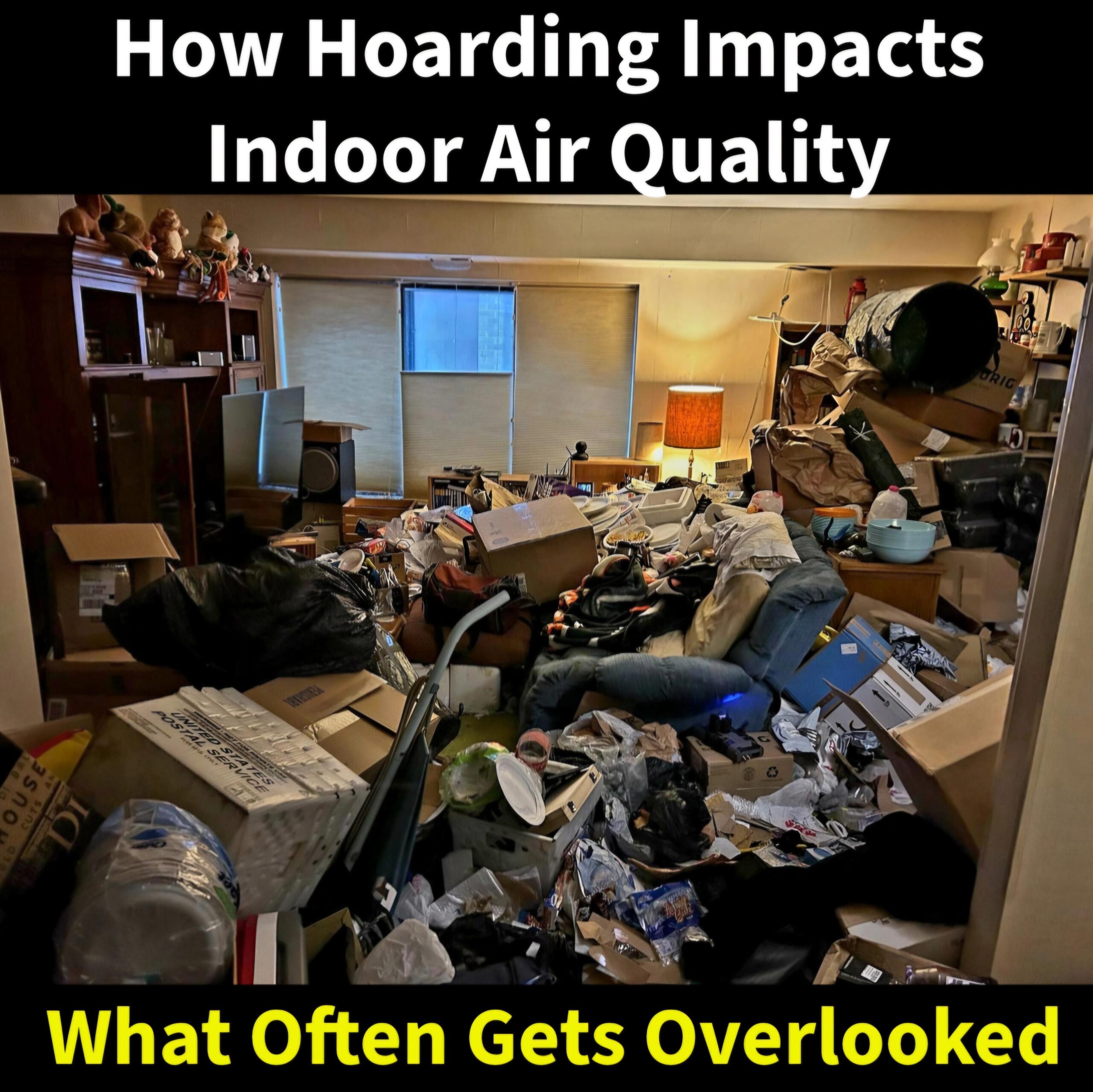
Hoarding conditions don’t just affect how a home looks—they fundamentally change the air people breathe inside it. In many hoarded homes, indoor air quality (IAQ) becomes compromised long before visible mold, odors, or health symptoms are obvious. By the time concerns arise, the air may already contain elevated levels of mold spores, bacteria, dust, and other airborne contaminants.
Understanding how hoarding impacts indoor air quality helps explain why these environments can become unsafe—even when there’s no obvious water damage or “musty” smell.
1. Trapped Dust, Debris, and Airborne Particulates
Excessive clutter creates countless surfaces that collect and trap dust, dander, and fine particulates. Unlike normal household dust, these materials are rarely disturbed or cleaned, allowing them to accumulate for years.
As people move through the space—or when HVAC systems cycle—these particles become airborne, leading to:
- Chronic coughing or throat irritation
- Worsening asthma or allergy symptoms
- Eye, nose, and sinus irritation
Because airflow is restricted, contaminated air lingers longer instead of being diluted or exhausted.
2. Hidden Mold Growth Without Obvious Leaks
Hoarding often blocks airflow around walls, floors, and ceilings. Even minor moisture—from humidity, condensation, or small plumbing issues—can become trapped behind stacks of belongings.
This creates ideal conditions for mold growth:
- Cardboard, paper, and fabrics act as food sources
- Poor ventilation prevents drying
- Mold grows unnoticed behind clutter
As mold colonies develop, they release microscopic spores into the air. These spores spread throughout the home and are easily inhaled—even when no visible mold is present.
3. Odors Are a Symptom, Not the Problem
Strong or persistent odors are common in hoarded homes, but odors are not the cause—they’re a warning sign.
Common odor sources include:
- Decomposing organic materials
- Pet waste or animal hoarding conditions
- Bacteria thriving in damp environments
Odors indicate airborne gases and microbial byproducts circulating through the living space. Masking smells with sprays or air fresheners does nothing to address the contaminated air itself.
4. Pest Activity and Bioaerosols
Hoarding conditions frequently attract rodents, insects, and other pests. These animals introduce additional air quality hazards, including:
- Fecal particles
- Urine residues
- Bacteria and pathogens
As these materials dry and break down, they become airborne bioaerosols that can circulate through the home—especially when disturbed during cleaning or movement.
5. HVAC Systems Spread Contaminants
Heating and cooling systems in hoarded homes often pull contaminated air into ductwork. Filters clog quickly or are ignored entirely, allowing pollutants to circulate repeatedly throughout the property.
Instead of improving comfort, HVAC systems can:
- Redistribute mold spores
- Spread odors room to room
- Increase exposure throughout the entire home
This is why hoarded homes may feel “stale” or unhealthy even after partial cleanouts.
6. Why Basic Cleaning Doesn’t Fix Air Quality
Removing visible clutter alone does not restore indoor air quality. Many contaminants remain:
- Embedded in carpets and soft materials
- Settled inside ductwork
- Present on surfaces behind removed items
Without proper assessment, including air or surface testing, occupants may continue breathing contaminated air even after the home looks cleaner.
7. The Role of Professional Assessment
Professional indoor air quality evaluation helps identify:
- Elevated mold spore levels
- Bacterial contamination
- Particulate concentration
- Hidden moisture issues
This information is critical for determining what level of cleanup, remediation, or environmental correction is truly needed—not just what looks necessary.
Moving Forward
Hoarding doesn’t just impact living conditions—it directly affects health through the air itself. Poor indoor air quality in hoarded homes is often invisible, progressive, and underestimated. Addressing these environments safely requires more than trash removal. It requires understanding how air moves, how contaminants form, and how to restore a space so it’s not only clean—but healthy.