
24/7 Multi-Family Water Damage Remediation
In a multi-family property, water rarely respects unit boundaries. Our IICRC-certified technicians trace moisture vertically and horizontally, identify affected areas, extract excess water, evaluate materials, establish controlled drying conditions, monitor progress and document the mitigation process.
- IICRC-Certified Water Damage Specialists
- Advanced Moisture Evaluation & Structural Drying
- Direct Insurance Claims Assistance
- 28+ Years of Water Damage Experience
Because MSI has specialized in mold inspection and remediation since 1998, we don’t guess when your building is dry. We measure it.
Contact Our Certified Experts
Trust Our 5-Star Rating


In a time when it can be hard to get service providers to even call you back, MSI is a real standout. No one wants to deal with water damage or mold, but knowing this team is out there doing high‑quality, reliable work has been a game changer for us as homeowners.



They were able to start the remediation within a week of contacting them, which gave us huge peace of mind. The team was professional, respectful of our home, and explained what they were doing each step of the way. Knowing our baby’s health and safety were a priority to them made such a difference.
Should we need further remediation, we will definitely continue using them. I’m so grateful we found MSI and would recommend them to anyone who needs mold remediation.
Commercial Water Damage Remediation for Multi-Family Properties: One Leak Can Become a Multi-Unit Problem
In a multi-family property, water rarely respects unit boundaries. A supply line breaks in Unit 304. Water moves beneath the bathroom floor, enters the wall assembly, then reaches the ceiling in 204, then a shared hallway.
By the time maintenance finds the source, the real question isn’t “Where did the leak happen?” It’s “How many units and building assemblies did the water actually affect?”
Mold Solutions & Inspections (MSI) builds every commercial water damage remediation project around that question. Our IICRC-certified technicians trace moisture vertically and horizontally, identify affected areas, extract excess water, evaluate materials, establish controlled drying, monitor progress and document the work.
The goal is to give property managers what they need right after a multi-unit loss: a clear picture of what’s affected, what isn’t, and what happens next.
The Leak Is in One Unit. The Water Damage May Not Be
This is what makes multi-family losses different. Water can move through:
- Floor assemblies
- Wall cavities
- Plumbing penetrations
- Ceiling systems
- Shared walls
- Hallways
- Utility chases
- Adjacent units
- Units below
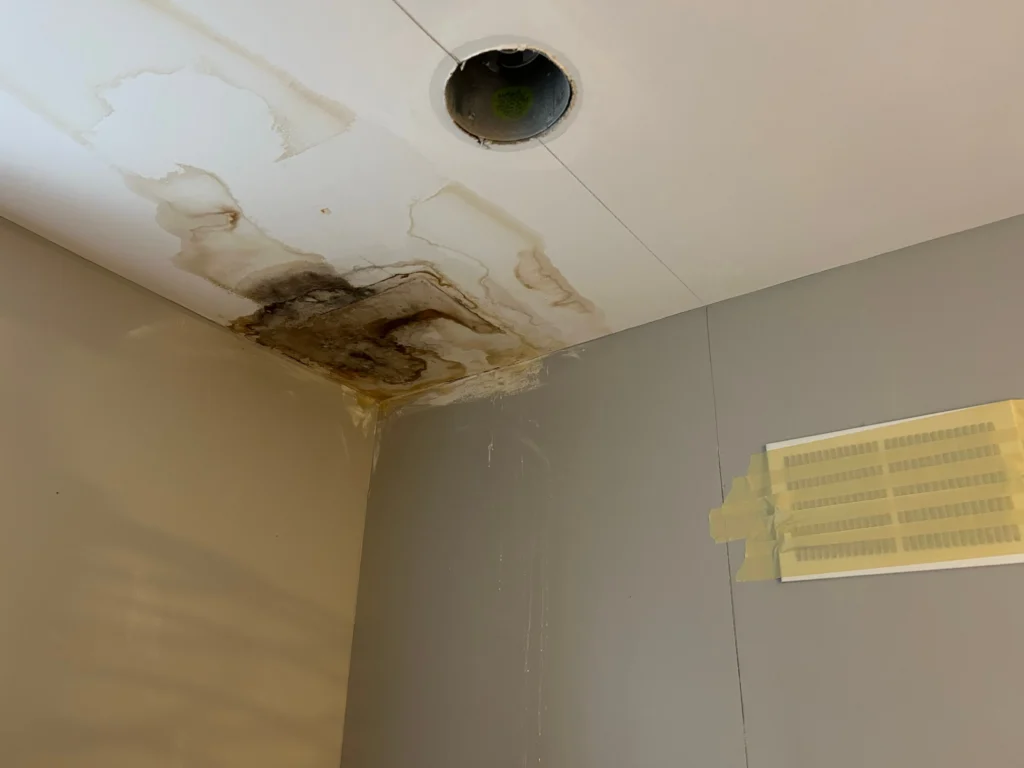
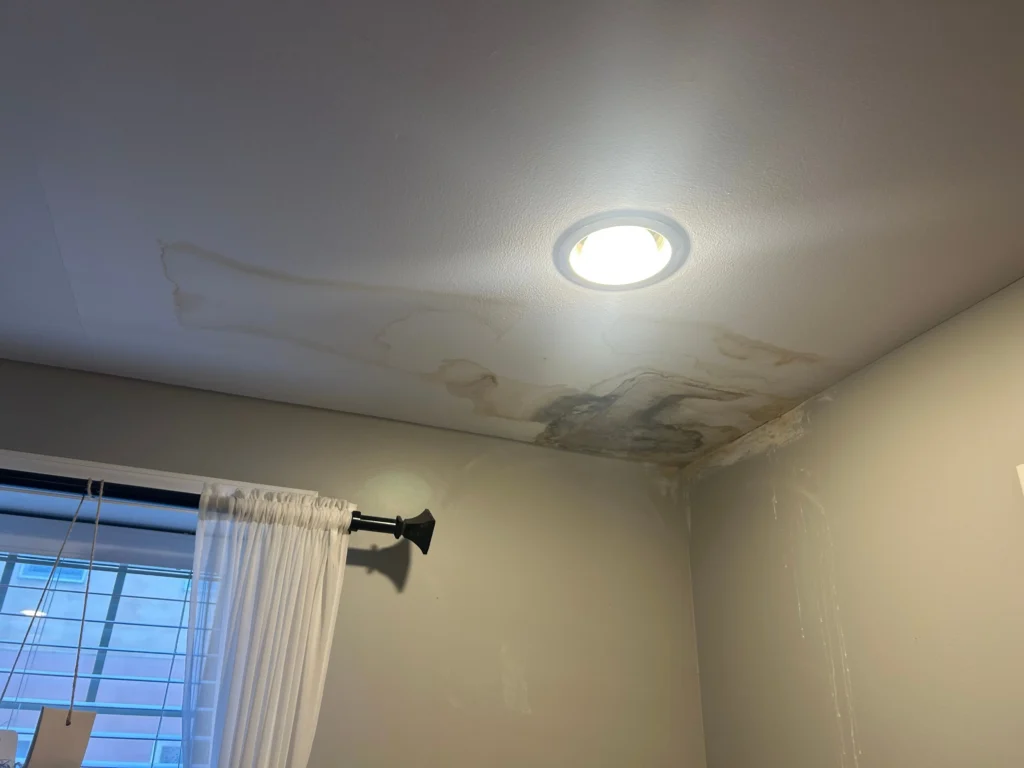
The resident in the source unit sees a puddle. The resident downstairs sees a ceiling stain. The property manager gets a call from a third tenant hours later. All three are experiencing different parts of the same water loss.
MSI doesn’t stop at the unit where the water started. We follow where the water went.
The MSI Difference: Define the Loss Before It Becomes Building-Wide
After a multi-unit loss, pressure comes from every direction. Residents want answers. Maintenance wants access. Ownership wants scope. Insurance may need documentation. Vendors need direction. Everyone wants to know when things return to normal.
The worst response is unnecessary uncertainty. Effective commercial water damage remediation replaces guesswork with facts. MSI uses professional moisture-detection methods to help answer:
- Which units are affected?
- Which building materials are wet?
- Did water reach the floor below?
- Did it migrate into adjacent units?
- What can be dried, and what requires removal?
- Which areas appear unaffected?
- Is the drying strategy actually working?
Better information creates better decisions.
Our 8-Step Commercial Water Damage Remediation Process
Each step has a purpose: control the loss, understand its true boundaries, and prove the building is dry before repairs begin.
Identify & Control the Source
The first priority is stopping additional water from entering the building. Common multi-family losses include:
- Burst pipes and supply-line failures
- Toilet and bathtub overflows
- Washing-machine and dishwasher leaks
- Water heater failures
- Sprinkler discharges
- Roof leaks
- HVAC or condensate problems
- Sewer backups
- Storm water intrusion
Depending on the source, plumbers, roofers, maintenance staff or other trades may be needed to correct the underlying problem. They stop the source. MSI addresses the resulting water damage.
Start With the Source Unit—Then Look Beyond It
The unit where the incident occurred is a starting point, not the full scope. MSI evaluates how water moved from the source into surrounding assemblies. For example:
Unit 304 bathroom → subfloor / floor assembly → wall cavity → Unit 204 ceiling → shared hallway wall
That path often isn’t obvious from visual inspection alone. That’s why MSI follows the water rather than treating each visible symptom in isolation.
Vertical Migration Changes Everything
In a single-family home, water moving downward may affect another room. In a multi-family property, it can affect another resident, another leasehold and another set of building materials. Water can travel through openings around plumbing lines, electrical penetrations, HVAC components, structural assemblies and utility chases. A significant upper-floor loss can reach several levels. The floor where the leak started isn’t automatically the floor where the damage ends.
Evaluate Moisture Unit by Unit
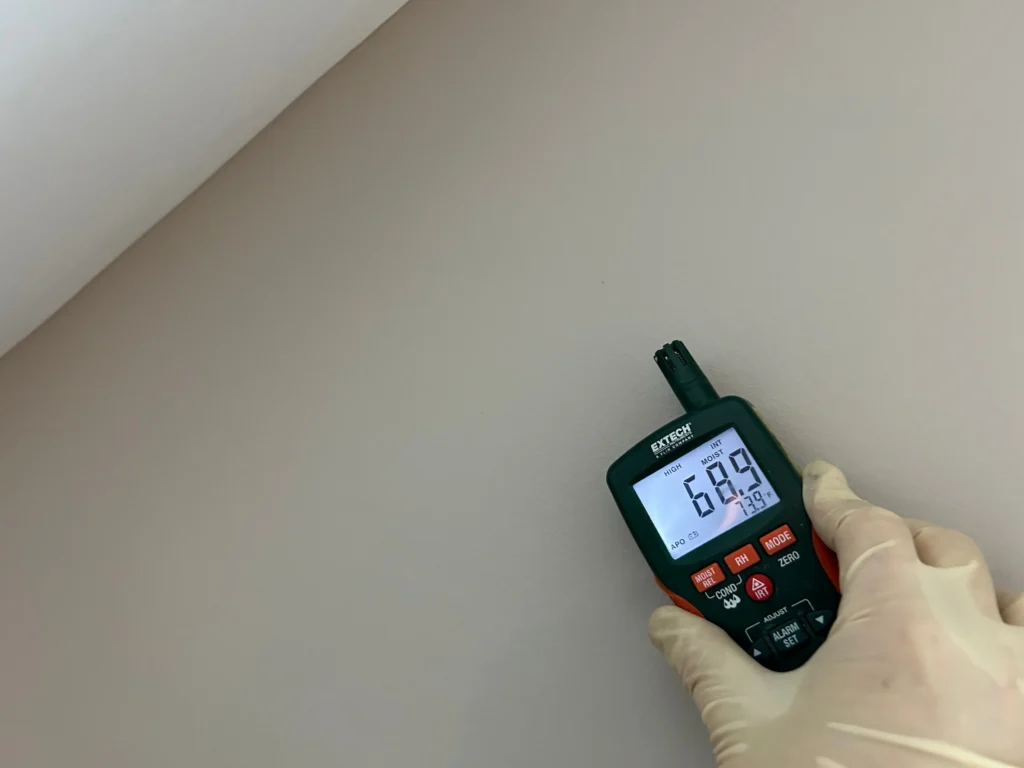
MSI uses professional moisture-detection equipment to evaluate affected and potentially affected materials, which may include:
- Drywall and ceilings
- Flooring and subflooring
- Baseboards and cabinets
- Wall cavities and insulation
- Common-area materials
- Materials in units below
This creates a clearer, unit-by-unit picture. Instead of “the third floor had a leak,” the project can be approached specifically:
- Source unit: affected
- Unit below: moisture detected in ceiling and wall
- Adjacent unit: evaluated based on loss conditions
- Hallway: localized moisture identified
Specific information beats assumptions every time.
Knowing What Isn’t Wet Matters Too
Property managers need to identify damage and avoid expanding the project unnecessarily. When evaluation shows an adjacent area isn’t affected, that’s operationally valuable. It can mean less disruption, fewer residents impacted by mitigation work, less unnecessary demolition, more focused equipment placement and a clearer remediation scope. The goal isn’t to make the project bigger. It’s to understand its actual boundaries.
Extract Standing & Excess Water
When standing water is present, MSI uses professional extraction equipment where appropriate to remove as much as possible. Fast extraction reduces the moisture that must later be removed through evaporation and dehumidification.
But extraction is only one step. A carpet may stop squishing while the subfloor stays wet. A ceiling may stop dripping while moisture remains in the assembly. A wall can feel dry while the material behind it is still affected. No visible water doesn’t mean no remaining moisture.
Determine What Can Stay
Multi-family water damage gets expensive and disruptive when demolition expands unnecessarily. But leaving inappropriate wet materials in place creates its own problem. MSI evaluates materials using factors including:
- Water source and potential contamination
- Material type and condition
- Degree of saturation
- Duration of exposure
- Accessibility
- Ability to effectively dry the material
The result is a deliberate approach: dry when appropriate, remove when necessary. Not every wet wall requires the same response, and not every unit requires the same scope.
Minimize Demolition Without Compromising the Mitigation
Picture water reaching three units. One has saturated drywall requiring removal. The unit below has a wet ceiling assembly requiring access. An adjacent unit shows no elevated moisture in the evaluated area. Treating all three identically makes little sense. Sound commercial water damage remediation lets the conditions of each affected area guide the decision, limiting disruption while still addressing the damage that actually exists.
Establish Controlled Structural Drying
After extraction and any necessary material removal, MSI establishes controlled drying conditions using professional equipment such as air movers, dehumidifiers, moisture meters and atmospheric monitoring equipment.
Equipment is positioned based on the needs of the affected materials and spaces. In an occupied building, planning also accounts for noise, access, residents, hallways, doors and shared spaces. Drying the building matters. Managing how drying affects residents matters too.
Monitor Drying by Area
MSI doesn’t install equipment and return days later to pick it up. We monitor moisture and environmental conditions to confirm materials are drying. That’s especially important in multi-unit projects, because different areas dry at different rates. One unit may reach appropriate drying goals before another. One wall assembly may respond differently than the ceiling below.
If readings aren’t progressing as expected, we investigate and adjust. Equipment running tells you equipment is operating. Moisture readings tell you whether the building is drying.
Verify the Dry
Residents want repairs done fast. Property managers want units back to normal. But reconstruction shouldn’t get ahead of mitigation. Before affected areas are closed and cosmetic repairs proceed, moisture conditions should be evaluated. MSI uses moisture measurements to assess progress and confirm when appropriate drying goals are reached. Don’t rebuild over uncertainty. Measure. Dry. Verify. Then repair.
Common Multi-Family Water Loss Scenarios
Different sources demand different commercial water damage remediation strategies. Here’s how MSI approaches the most common ones.
Toilet & Bathroom Overflows
01
Bathrooms are a frequent source of multi-family losses. An overflow in an upper-floor unit can affect the bathroom floor → subfloor → floor assembly → ceiling below → walls. The water source matters too: a supply-line failure presents very different conditions than a sewage-related overflow. MSI evaluates both where the water traveled and what kind of water was involved.
Washing Machine & Appliance Leaks
02
A failed hose or appliance connection can release water fast. In an apartment building, that water can migrate beyond the laundry area into adjacent rooms, hallways, wall cavities, flooring and units below. The appliance may be fixed in an hour. The water it released may require a much larger investigation. MSI follows moisture beyond the appliance footprint.
Burst Pipe Water Damage
03
A burst pipe can affect multiple units before the supply is shut off. Once the pipe is repaired, MSI evaluates the resulting moisture path. The plumber answers “Where did the pipe fail?” MSI answers “Where did the water go?” Both questions matter.
Sprinkler Discharge in Multi-Family Properties
04
A sprinkler activation can release significant water across units, corridors and common areas, migrating between floors to affect apartments, hallways, ceiling systems, flooring, walls, common spaces and contents. Once the fire-protection system has been appropriately addressed, MSI evaluates and mitigates the resulting water damage.
Roof Leaks in Apartment & Multi-Family Buildings
05
A roof leak may first appear in a top-floor unit, but water can travel along building materials before showing up inside. Multiple top-floor units may be affected differently, and water can move into wall assemblies or lower levels. A roofing contractor handles the roof. MSI investigates what the water affected inside the building.
Sewage Backup in a Multi-Family Property
06
Sewage losses require a different strategy than ordinary clean-water events. A backup can affect individual units, shared plumbing areas, basements, common spaces, flooring and porous building materials. Potential contamination shapes decisions about cleaning, containment, material removal and drying. MSI evaluates conditions before determining the appropriate commercial water damage remediation approach.
Property Managers Need More Than a Drying Crew
After a multi-family loss, property managers become the communication hub. Calls come from residents, ownership, maintenance, insurance representatives, plumbers, remediation vendors and contractors. Everyone wants different answers:
- Residents ask: "Is my unit affected?"
- Ownership asks: "How extensive is this?"
- Maintenance asks: "What needs to be opened?"
- Insurance asks: "What was damaged and what work was performed?"
MSI’s role isn’t just placing drying equipment. It’s creating clarity around the entire project.
Documentation That Tells the Story of the Loss
Multi-unit losses get confusing fast. Clear documentation establishes what was observed and what occurred during mitigation. Depending on the project, MSI documentation may include:
- Photographs
- Affected units and areas
- Moisture readings
- Drying records
- Material-removal information
- Equipment information
- Work performed and drying progress
That creates a consistent record for property management, ownership and other stakeholders.
Tenant Communication Starts With Better Information
Residents don’t need technical terminology. They need understandable answers: Where is the water damage? Does my unit need equipment? Does something need to be removed? Why is equipment running? When will mitigation be complete? MSI’s measurement-driven commercial water damage remediation helps property management communicate from actual conditions rather than speculation, reducing confusion during an already disruptive event.
Facility Managers: We Work With the Building, Not Around It
Facility teams often know the building better than anyone—shared plumbing, shutoffs, access points, sensitive areas, operational priorities and previous water events. That knowledge is valuable during remediation. MSI coordinates with maintenance personnel and appropriate trades so decisions reflect both the moisture conditions and the realities of your property.
Water Damage in Occupied Units
A water loss doesn’t automatically mean every resident must leave. But it also doesn’t mean every occupied unit stays untouched by mitigation. Occupancy decisions depend on the specific conditions, including:
- Extent of water damage
- Water source
- Contamination
- Material removal
- Equipment placement
- Safety considerations
- Access requirements
MSI identifies and documents conditions so property management and other stakeholders can make informed decisions.
Contents & Resident Belongings
Water damage in occupied units means dealing with personal property. Furniture, boxes and other belongings may be directly affected, need protection, block access to wet materials, require temporary relocation, or need specialized evaluation or remediation. MSI coordinates contents needs as part of the project when necessary. The objective isn’t to empty the unit automatically. It’s to create the access mitigation requires while protecting belongings wherever practical.
Why MSI's Mold Expertise Matters in Multi-Family Buildings
A hidden moisture problem in one unit can become a larger management problem if it isn’t addressed. Multi-family buildings hide moisture in many places:
- Shared walls
- Ceiling cavities
- Utility chases
- Flooring systems
- Cabinets
- Plumbing walls
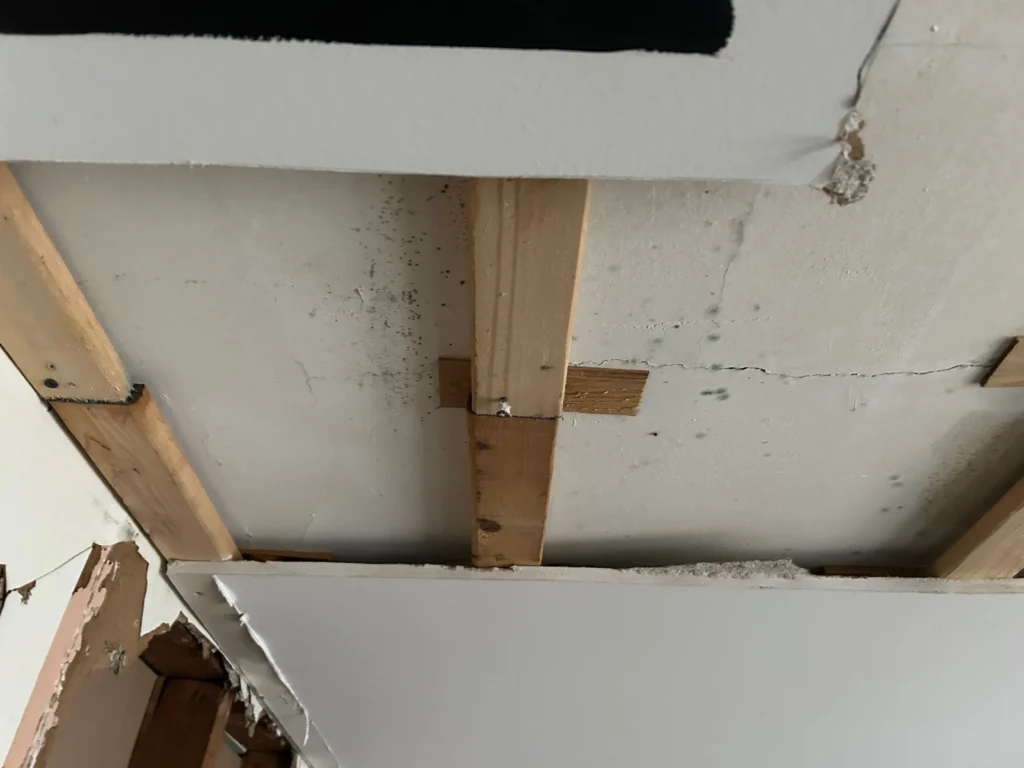
And some leaks aren’t discovered right away. Because MSI specializes in water damage, mold inspection and mold remediation, our technicians understand why overlooked moisture matters. We’re not only looking at the original leak. We’re looking for the conditions it created. That combined expertise strengthens every commercial water damage remediation project. Find the water problem before it becomes a recurring moisture problem.
Multi-Family Water Damage & Insurance Coordination
Multi-family losses can involve many parties: property owner, property manager, resident, maintenance team, insurance carrier, adjuster, contractors and potentially multiple policies.
MSI does not determine insurance coverage or liability. We document applicable aspects of the commercial water damage remediation project, including affected areas, moisture conditions, photographs, drying activities and work performed. MSI documents the mitigation. Insurance carriers determine coverage under the applicable policies.
Multi-Family Water Damage FAQs
What is commercial water damage remediation for multi-family properties?
It’s the process of evaluating and mitigating water damage in apartment buildings, condominiums and other multi-unit properties. It may involve multiple units, shared building assemblies and common areas.
Can water from one apartment reach other units?
Yes. Water can move vertically and horizontally through floor assemblies, walls, ceilings, utility penetrations and other building components.
How do you determine which units are affected?
MSI uses professional moisture-detection methods to evaluate affected and potentially affected materials rather than relying only on visible damage.
Does every affected unit require demolition?
No. Material-removal decisions depend on the water source, contamination, material condition, saturation, accessibility and the ability to effectively dry the material.
Can residents remain in their units during drying?
It depends on the specific conditions. Safety, contamination, material removal, access and equipment placement may all influence occupancy decisions.
How long does drying take?
There’s no single timeline. Different materials and units dry at different rates. MSI monitors actual moisture conditions and drying progress.
Can MSI handle a loss affecting several floors?
Yes. Multi-floor water migration is a key consideration in multi-family properties, so affected areas are evaluated beyond the source floor.
Does MSI provide moisture documentation?
Yes. MSI documents applicable moisture readings, affected areas, drying activities and project progress.
Does MSI handle mold if it's discovered?
Yes. MSI specializes in mold inspection and remediation in addition to water-damage mitigation.
Does MSI perform reconstruction?
MSI’s primary role is water-damage mitigation, structural drying and mold-related services. Reconstruction can be coordinated separately after mitigation is complete.
One Leak. Multiple Units. One Clearer Picture of the Damage
When water moves through a multi-family building, responding to the source unit isn’t enough. You need to understand the entire moisture path:
That’s MSI’s approach to commercial water damage remediation:
When you need dependable commercial water damage remediation backed by real measurements and mold expertise, trust the team that follows the water everywhere it goes.
Mold Solutions & Inspections (MSI)
- 24/7 Emergency Water Damage Response
- IICRC-Certified Technicians
- Water Damage & Mold Specialists
- 27+ Years of Experience | 9,000+ Projects
Multi-Unit Water Loss? Don’t assume where the damage stops. Let MSI trace it, measure it and verify the dry.
CALL MSI FOR 24/7 MULTI-FAMILY WATER DAMAGE RESPONSE