
24/7 Basement Flood Cleanup
Basement flood cleanup is more than pumping out water. We determine where the water traveled, extract standing water, identify materials that may require removal, establish controlled structural drying and monitor moisture until appropriate drying goals are reached.
- IICRC-Certified Water Damage Specialists
- Advanced Moisture Evaluation & Structural Drying
- Direct Insurance Claims Assistance
- 28+ Years of Water Damage Experience
Because MSI has specialized in mold inspection and remediation since 1998, we don’t guess when your building is dry. We measure it.
Contact Our Certified Experts
Trust Our 5-Star Rating


In a time when it can be hard to get service providers to even call you back, MSI is a real standout. No one wants to deal with water damage or mold, but knowing this team is out there doing high‑quality, reliable work has been a game changer for us as homeowners.



They were able to start the remediation within a week of contacting them, which gave us huge peace of mind. The team was professional, respectful of our home, and explained what they were doing each step of the way. Knowing our baby’s health and safety were a priority to them made such a difference.
Should we need further remediation, we will definitely continue using them. I’m so grateful we found MSI and would recommend them to anyone who needs mold remediation.
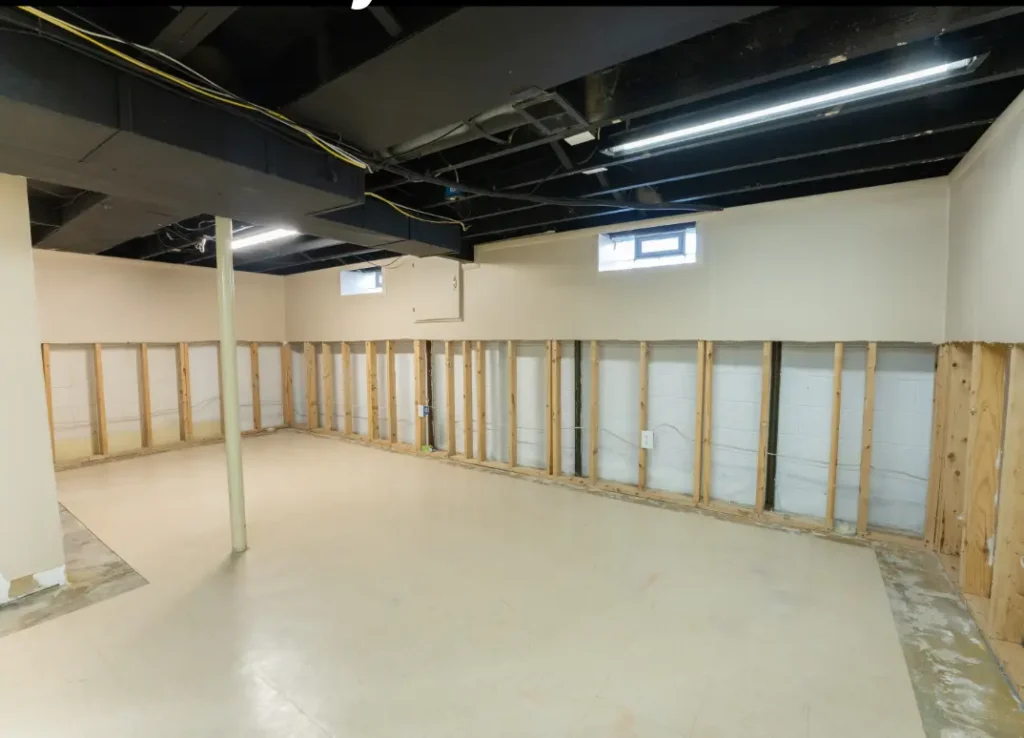
Basement Flood Cleanup: Getting the Water Out Is Only Step One
Your basement can look dry long before it actually is.
After a basement flood, the standing water grabs everyone’s attention. But once it’s gone, moisture stays trapped inside drywall, insulation, flooring systems, wall cavities, wood framing, and other materials, quietly fueling rot, warping, and mold.
And depending on where the water came from, contamination can matter just as much as moisture.
That’s why Mold Solutions & Inspections (MSI) treats basement flood cleanup as far more than pumping out water.
Our IICRC-certified technicians evaluate the source, trace where the water traveled, extract standing water, flag materials that may need removal, establish controlled structural drying, and monitor moisture until affected materials hit proper drying goals.
Pumping out the basement removes the flood. MSI addresses what the flood left behind.
Basement Flooded? Here's What to Do First.
Before you think about cleanup, think about safety.
Don't Walk Into Standing Water Until It's Safe
01
A flooded basement often involves electrical equipment, outlets, appliances, mechanical systems, and contaminated water. Never enter standing water when electrical or other hazards may be present.
Stop the Water Source When Possible
02
The right move depends on the cause:
- A burst pipe may require shutting off the water
- A failed water heater may need plumbing help
- Groundwater may keep entering until outside conditions change
- A sewage backup demands a completely different response
Don't Assume the Water Is Clean
03
Where the water came from changes everything. Groundwater, surface water, and sewage-related losses can introduce contaminants that affect what can safely be cleaned, dried, or kept.
Call MSI
04
Once immediate safety concerns are handled, MSI evaluates the water loss and starts professional cleanup fast, before the moisture spreads deeper.
Why Basements Are Different
Basements bring water-damage challenges no other space does.
- They sit below grade.
- They're naturally more humid than upper floors.
- They house mechanical equipment, utilities, and storage.
- Finished basements can hide massive amounts of moisture behind walls and beneath floors.
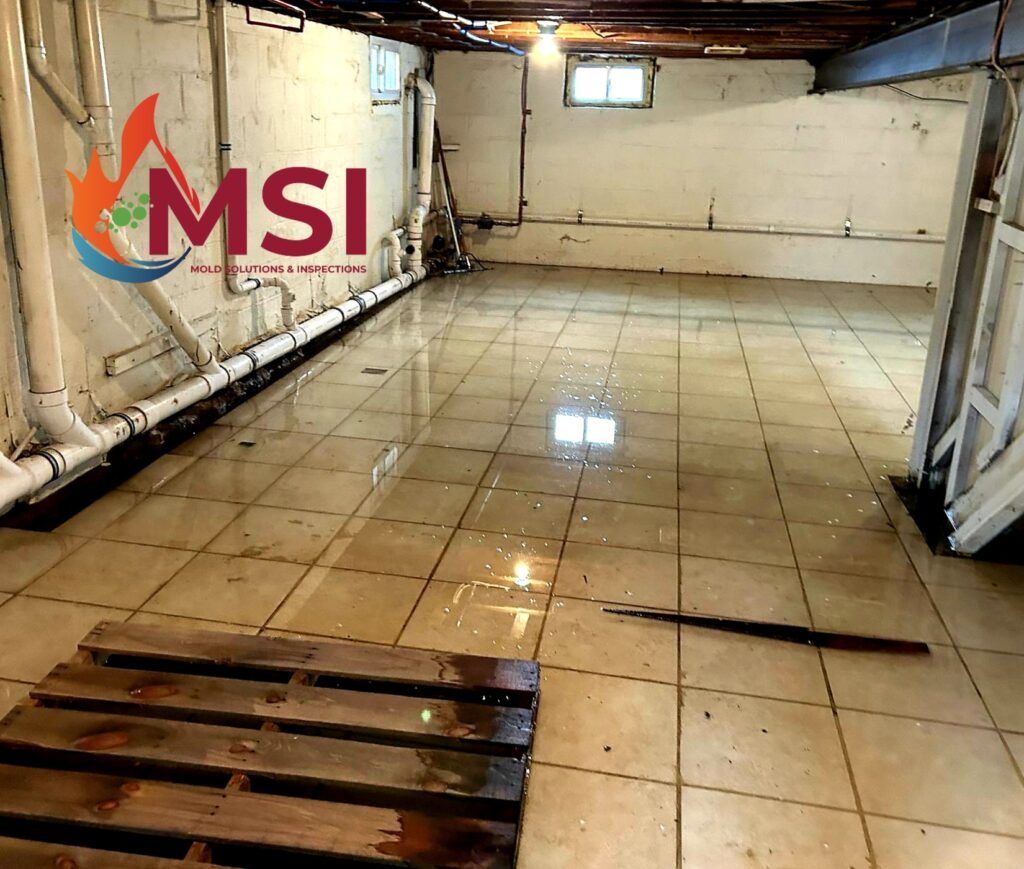
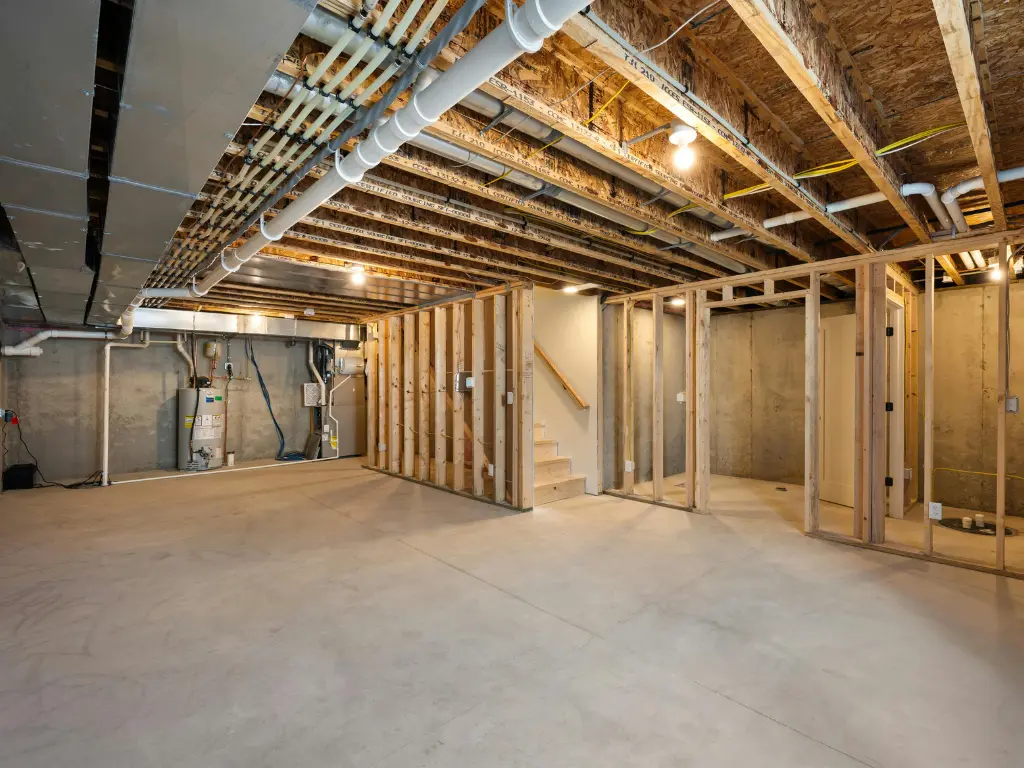
A basement that looks like this:
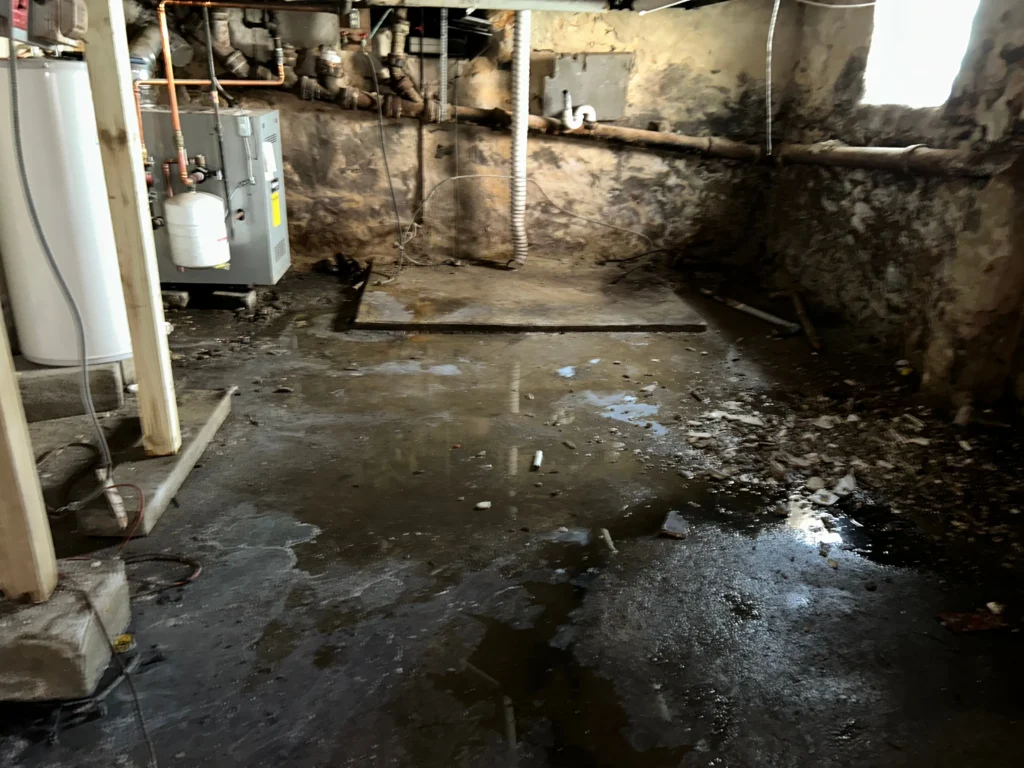
can actually look like this inside:
That’s why MSI never judges a basement from the doorway. We follow the moisture.
The MSI Difference: We Don't Stop at the Waterline
Most basement cleanup companies can pump out water. That’s necessary. It’s also the bare minimum.
The visible waterline rarely marks the edge of the damage. Water wicks upward into porous materials, migrates behind finished walls, and spreads beneath flooring.
MSI uses professional moisture-detection equipment to track exactly where that water went. Then we monitor how affected materials respond to drying.
Every decision follows the actual conditions:
- What's wet?
- What's contaminated?
- What can be dried?
- What needs to be removed?
- Is the drying strategy working?
- When is the basement actually dry?
The equipment doesn’t answer those questions. The measurements do.
Our Basement Flood Cleanup Process
Identify the Source of the Water
Before we clean up anything, we need to understand what happened. Common causes include:
- Heavy rainfall
- Groundwater intrusion
- Sump pump failure
- Sewer or drain backups
- Burst pipes
- Plumbing failures
- Water heater failures
- Appliance leaks
- Foundation water intrusion
- Storm-related flooding
The source shapes how we approach the entire loss.
Evaluate Water & Contamination Conditions
Not all basement floods are equal. A clean-water plumbing failure is a different situation from groundwater or a sewage backup.
The source and conditions directly affect:
- Safety precautions
- Cleaning procedures
- Material-removal decisions
- Drying strategy
- What materials can stay
Before deciding what can be saved, you have to know what the water touched.
Determine Where the Water Traveled
Standing water shows us part of the loss. Moisture detection reveals the rest. MSI evaluates potentially affected materials, including:
- Drywall
- Insulation
- Baseboards
- Wood framing
- Wall cavities
- Carpeting
- Carpet padding
- Hardwood or laminate flooring
- Subflooring
- Cabinets
- Stored contents
- Structural materials
This builds a complete picture of the flood damage, not just the obvious part.
Extract Standing Water
Our commercial extraction equipment removes standing and excess water fast. The more liquid water we pull out physically, the less moisture we have to remove later through evaporation and dehumidification.
But once the puddles vanish, the job isn’t done. Extraction removes the water you can see. Structural drying handles the moisture you can’t.
Determine What Can Be Dried
One of the most important calls after a basement flood is what stays and what goes.
Not every wet material needs demolition. But some materials should never simply be dried and left in place. MSI weighs:
- Water source
- Potential contamination
- Type of material
- Degree of saturation
- Duration of exposure
- Material condition
- Accessibility
- Ability to effectively clean and dry it
Our goal isn’t to tear out everything wet. It’s the right decision for each affected material.
What Happens to Drywall After a Basement Flood?
This is one of the first questions homeowners ask. The honest answer: it depends.
Drywall is porous and soaks up moisture through direct contact and wicking. Whether affected drywall can stay depends on contamination, saturation, deterioration, and whether it can be effectively dried.
In some cases, selective removal makes sense, both to address damaged material and to reach concealed wet areas behind it. MSI reads the conditions rather than applying one blanket demolition rule to every basement.
What About Basement Insulation?
Insulation creates another hidden-moisture trap. Water can enter a finished wall and soak the insulation with no obvious sign on the room-facing surface.
The right response depends on:
- Insulation type
- Water source
- Degree of saturation
- Contamination
- Ability to access the material
- Material condition
This is exactly why moisture investigation matters in a finished basement. The wall can look normal while the assembly behind it stays soaked.
What Happens to Basement Flooring?
Different flooring systems handle water differently. A flooded basement may include:
- Carpet
- Carpet padding
- Luxury vinyl
- Laminate
- Engineered flooring
- Hardwood
- Tile
- Concrete
The finished surface isn’t your only concern. Water migrates underneath flooring and attacks adhesives, padding, and underlayment. MSI evaluates the entire flooring assembly, not just whether the top looks dry.
Structural Drying: Where Basement Cleanup Becomes Measurable
After extraction and any necessary material removal, MSI establishes controlled drying conditions.
- Commercial air movers drive evaporation from wet materials
- Professional dehumidifiers pull moisture out of the surrounding air.
But equipment alone isn’t the process. Measurement is.
MSI takes moisture and atmospheric readings to confirm real drying progress. When conditions aren’t improving as expected, we investigate and adjust:
- Equipment placement may change
- Airflow may need modification
- A concealed wet area may need deeper investigation
We don’t wait for the equipment rental period to run out. We follow the drying data.
How Does MSI Know When Your Basement Is Dry?
Not by touching the wall. Not because the floor looks dry. Not because the dehumidifier slowed down. And definitely not because a few days passed.
MSI uses professional moisture measurements to confirm affected materials have hit proper drying goals.
Don’t guess when the basement is dry. Measure it.
That’s one of the biggest differences between basic water removal and professional water-damage mitigation.
Basement Flooding & Mold: Why MSI Has an Advantage
MSI’s background in mold inspection and remediation gives us a sharp perspective on basement flooding. We know exactly what happens when moisture problems go unresolved.
And basements already stack the odds against you:
- Below-grade construction
- Limited ventilation
- Higher humidity
- Concealed wall assemblies
- Stored contents
- Previous water intrusion
Our mold expertise changes the questions we ask during cleanup:
- Where could moisture be hiding?
- Are materials actually drying?
- Was there a pre-existing moisture condition?
- Is there evidence that demands further investigation?
We aren’t just thinking about today’s flood. We’re thinking about what happens after everyone leaves.
Basement Flood Cleanup After a Sump Pump Failure
A sump pump failure can flood a basement fast during heavy rain or a groundwater surge. Once the immediate flooding is controlled, the basement should be evaluated based on:
- Source of the incoming water
- Depth and duration of flooding
- Materials affected
- Potential contamination
- Moisture migration
- Condition of finished materials
Replacing the sump pump does nothing about water that already entered the structure. Fix the water-control problem. Then address the water damage.
Groundwater in Your Basement
Water entering through foundation walls, floor joints, window wells, or other below-grade pathways brings different concerns than an internal plumbing leak. Groundwater can carry contaminants picked up before it ever reached your building.
MSI evaluates the conditions of the loss before choosing the right cleanup and material-handling procedures.
If your basement has a recurring groundwater problem, correcting the underlying drainage, waterproofing, or foundation issue may call for another qualified specialist. MSI’s role is addressing the resulting water and moisture damage.
Basement Sewage Backup
A sewage-related loss demands a completely different approach from a clean-water event. Contaminated water affects both the cleaning process and every decision about porous materials.
Avoid direct contact with sewage-contaminated water and affected materials. MSI evaluates the affected areas and determines the appropriate mitigation approach based on the conditions.
When contamination is involved, drying alone isn’t enough.
Finished Basement Flood Cleanup
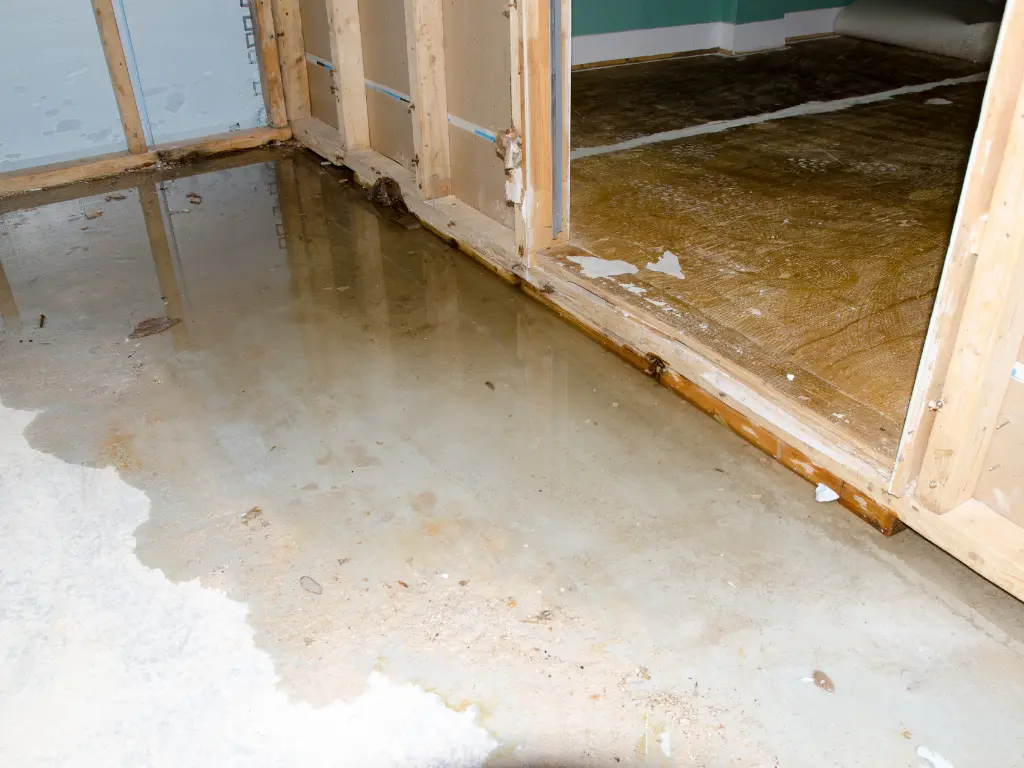
A finished basement can hide far more water damage than bare concrete. Water moves along a path like this:
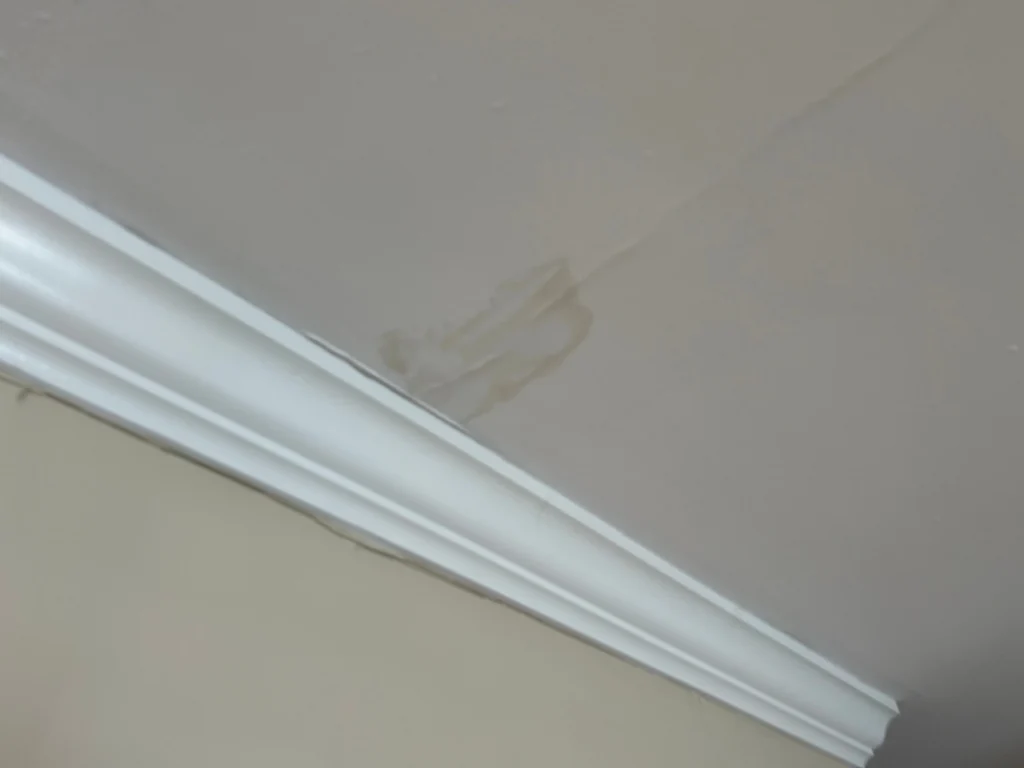
all while the visible damage stays limited. That makes moisture detection critical. MSI investigates well beyond the waterline to determine whether moisture has invaded concealed building assemblies.
Unfinished Basement Flood Cleanup
An unfinished basement may look simpler, but water still attacks:
- Wood framing
- Sill plates
- Stored contents
- Mechanical equipment
- Insulation
- Stair assemblies
- Adjacent finished areas
- Porous structural materials
Concrete can also hold and slowly release moisture long after the standing water is gone. No finished walls doesn’t mean there’s nothing left to dry.
Can I Clean Up a Flooded Basement Myself?
For a very small clean-water event with no electrical hazards and minimal material involvement, you may be able to handle basic water removal.
But professional evaluation becomes far more important when:
- Water covers a significant area
- Water is several inches deep
- Finished walls or flooring are affected
- Water entered wall cavities
- Groundwater is involved
- Sewage may be present
- Electrical hazards exist
- The water sat for an extended period
- You don’t know how far the moisture traveled
- Mold is visible or suspected
When you’re uncertain, the real question isn’t whether you can remove the water. It’s whether you can tell what stays wet afterward.
Basement Flood Damage & Insurance
Coverage depends heavily on why the basement flooded. Damage from a sudden internal plumbing failure is often treated differently from:
- Groundwater
- Surface flooding
- Sewer backups
- Long-term seepage
- Maintenance-related problems
Some losses require specific endorsements or separate flood coverage.
MSI documents the applicable parts of the mitigation project, including affected areas, photographs, moisture conditions, drying activities, and work performed.
MSI documents the damage and mitigation. Your insurance carrier determines coverage. And don’t wait on your insurer to start mitigation, acting fast protects both your property and your claim.
Ceiling Water Damage Repair FAQs
What should I do first when my basement floods?
Prioritize safety. Stay out of standing water when electrical, structural, or contamination hazards may exist. Stop the source when it’s safe, and call for professional help right away.
How quickly should basement flood cleanup begin?
As fast as it’s safe to act. Water keeps migrating into porous and concealed materials every hour the basement stays wet.
Is basement floodwater contaminated?
It depends on the source. Groundwater, surface flooding, and sewage-related water bring very different contamination concerns than certain clean-water plumbing failures.
Is pumping out the basement enough?
Rarely. Moisture often remains inside drywall, insulation, flooring, framing, and other materials long after the standing water is gone.
Does wet basement drywall have to be removed?
Sometimes, but not always. The decision depends on contamination, saturation, condition, accessibility, and whether the material can be effectively dried.
How do you find moisture behind basement walls?
We use professional moisture-detection equipment and measurements to evaluate both affected and potentially affected materials.
How long does basement drying take?
There’s no single correct number. Materials, saturation, humidity, water source, and environmental conditions all shape it. MSI monitors real drying progress instead of relying on a predetermined number of days.
Can a flooded basement develop mold?
Yes. Lingering excess moisture creates conditions favorable to microbial growth. That’s why prompt water removal and effective structural drying matter so much.
Does MSI handle mold if it's discovered?
Yes. MSI specializes in mold inspection and remediation alongside water-damage mitigation.
Can you help with my insurance claim?
We provide applicable documentation of the water damage and mitigation process. Coverage decisions stay with your insurance carrier.
The Basement Looks Dry. But Is It?
That’s the question every homeowner should ask once the standing water is gone.
A successful basement flood cleanup doesn’t end when you can walk across the floor again. It ends when the affected areas have been properly evaluated, contaminated or damaged materials have been addressed, remaining materials have been dried, and the results have been verified.
That’s the MSI approach:
Mold Solutions & Inspections (MSI)
- 24/7 Emergency Water Damage Response
- IICRC-Certified Technicians
- 27+ Years of Experience | 9,000+ Projects
- Serving Pennsylvania, New Jersey & Delaware
Basement Flooded?
Every hour water sits in your basement, it spreads deeper into your floors, walls, and structure. Don’t give it the chance.
Get the water out. Then make sure the moisture is gone.