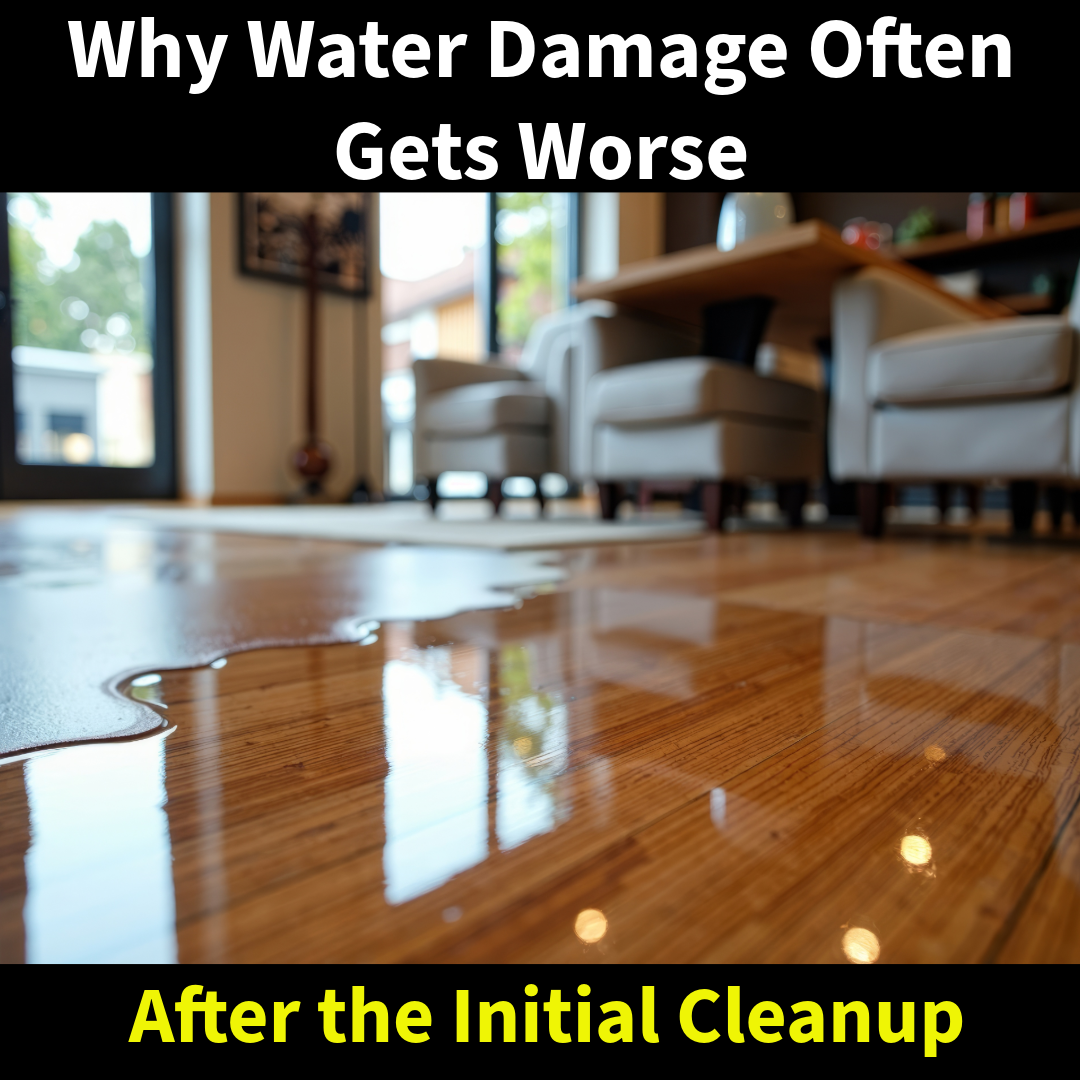
When water damage occurs, most homeowners focus on the immediate problem: visible water, wet floors, or obvious damage. Once the water is extracted and the space looks dry again, it’s easy to assume the issue has been resolved. Unfortunately, this is often when the real problems begin.
We regularly see situations where water damage actually becomes worse after the initial cleanup is finished—not because anything dramatic happens, but because hidden moisture was never fully addressed.
Water Doesn’t Stay Where You See It
Water moves quickly and quietly through a structure. It travels behind walls, under flooring, into insulation, and along framing long before it ever shows up as a visible problem. By the time water is noticed on the surface, it has often already spread into areas that aren’t immediately accessible.
If cleanup focuses only on what can be seen—without opening up affected areas or checking moisture levels inside building materials—water can remain trapped long after the space looks dry.
Dry to the Touch Doesn’t Mean Dry
One of the most common misconceptions after water damage is assuming materials are dry because they feel dry. Drywall, wood, and insulation can appear normal on the surface while still holding significant moisture internally.
Heating systems, air circulation, and time can dry the exterior of materials while moisture remains locked inside. When that happens, conditions are created for swelling, deterioration, odors, and mold growth to develop later—sometimes weeks after the cleanup appears complete.
Incomplete Drying Leads to Secondary Damage
When moisture isn’t fully removed, secondary damage becomes a real risk. Materials can begin to break down, adhesives can fail, and finishes can deteriorate. In many cases, homeowners don’t connect these later issues to the original water event because enough time has passed that it feels like a new problem.
This is also when mold growth often appears. Mold doesn’t require flooding or standing water—it only needs sustained moisture and organic material. Even small amounts of trapped moisture can be enough.
Why These Problems Are Often Missed Early
Initial cleanups are often done under time pressure, stress, or insurance constraints. The focus is frequently on visible damage and immediate stabilization, not long-term verification that everything has fully dried.
Without proper moisture mapping, material evaluation, and follow-up checks, hidden moisture can easily be missed. Once walls are closed back up or flooring is reinstalled, addressing those issues becomes far more disruptive and costly.
What Makes the Difference After Cleanup
The difference between a successful recovery and ongoing problems often comes down to verification. Knowing where water traveled, what materials were affected, and whether everything is actually dry matters more than how quickly the space looks normal again.
Water damage isn’t truly resolved when the water is gone—it’s resolved when the moisture is gone.
Understanding the Bigger Picture
When water damage seems to get worse after cleanup, it’s rarely a mystery. In most cases, it’s the result of moisture that was never fully identified or addressed during the initial response.
Taking the time to properly assess, dry, and document affected areas helps prevent secondary damage, mold growth, and repeat issues that surface long after the original event is forgotten.