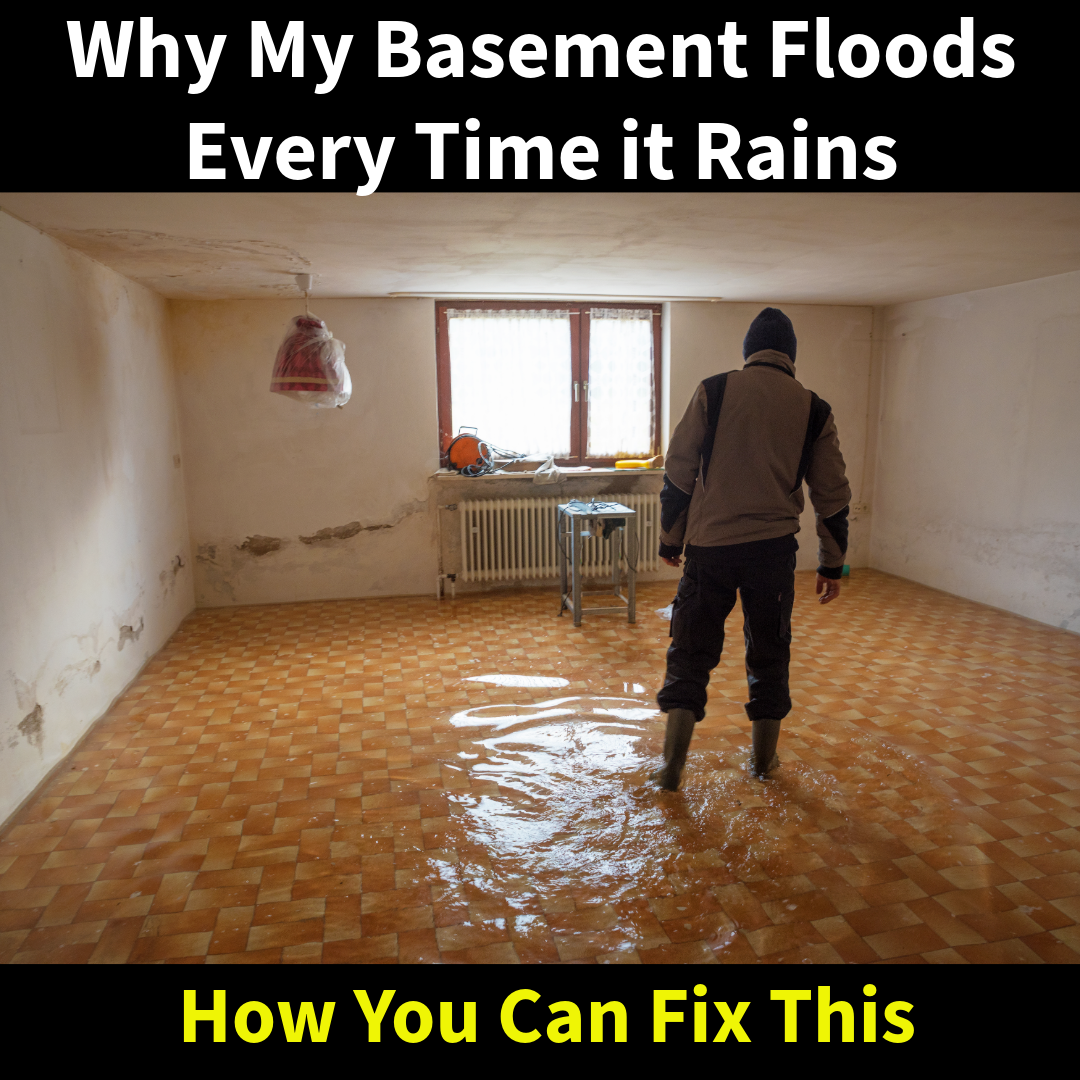
Why My Basement Floods Every Time It Rains

Few things are more frustrating for homeowners than walking into the basement after a heavy rain and finding water on the floor. Basement flooding is one of the most common water damage issues in homes, and in many cases it happens repeatedly because the underlying cause has never been properly identified.

Understanding why your basement floods every time it rains is the first step toward preventing future water damage and protecting your home.


Basement flooding rarely happens for just one reason. Often it is the result of multiple moisture issues working together.

Some of the most common causes include:

  • Poor exterior drainage around the home
  • Clogged or broken gutters and downspouts
  • Improper grading around the foundation
  • Foundation cracks allowing water intrusion
  • Failed sump pumps or backup systems
  • Sewer line backups during heavy storms

When large amounts of rainwater collect around a home’s foundation, pressure builds and forces water through even the smallest openings.


One of the biggest reasons basements flood during rainstorms is improper drainage around the home. If the soil slopes toward the house instead of away from it, rainwater collects around the foundation walls. Over time, that water begins finding pathways into the basement through cracks, joints, and porous concrete.

Homes that were built decades ago often experience this problem as landscaping and soil settle over time.


Gutters and downspouts are designed to move large amounts of water away from the structure. When they become clogged with leaves or debris, rainwater can overflow and pour directly next to the foundation. During heavy storms this concentrated water can quickly saturate the soil and lead to basement leaks.

Downspouts that discharge too close to the house can create the same problem.


Small cracks in foundation walls or floors can allow water to enter the basement when the surrounding soil becomes saturated. During heavy rainfall the pressure against the foundation increases significantly. Even hairline cracks can allow water to seep through under these conditions.

Older homes and homes with block foundations are particularly prone to this type of water intrusion.


Many basements rely on sump pumps to remove groundwater that collects around the foundation. If the sump pump fails, loses power, or cannot keep up with the volume of water during a major storm, flooding can occur quickly.

Without a functioning sump system, water has nowhere to go once it reaches the basement.


In some neighborhoods, heavy rain overwhelms municipal sewer systems. When that happens, water can back up through basement drains or plumbing fixtures.

This type of flooding is particularly serious because it often involves contaminated water, which requires professional cleanup and sanitation.


When water enters a basement and is not dried properly, moisture becomes trapped in building materials such as drywall, insulation, wood framing, and flooring. Within 24 to 72 hours, mold can begin developing in damp areas. Even if the visible water is removed quickly, hidden moisture behind walls or under flooring can still create ideal conditions for mold growth.

This is why proper water extraction and structural drying are critical after any basement flood.


If your basement floods during a rainstorm, acting quickly can help reduce long-term damage.

Important steps include:

  • Stopping the water source if possible
  • Removing standing water
  • Protecting belongings and electrical equipment
  • Documenting the damage for insurance purposes
  • Identifying where the water is entering the home

However, basement flooding often leaves hidden moisture behind walls, inside insulation, and under flooring. Without proper drying equipment and moisture detection tools, these areas can remain wet long after the visible water is gone.

In situations where flooding is significant or moisture has spread into building materials, professional water damage restoration services are often necessary to properly extract water, dry structural materials, and prevent mold growth.


If your basement floods every time it rains, the issue usually stems from drainage problems, foundation conditions, or plumbing infrastructure that cannot handle heavy stormwater. Identifying the cause and correcting it is essential to prevent repeated water damage and mold growth.

Professional inspections can help determine where water is entering the home and what steps are needed to properly resolve the problem.


Why Storm Flooding Can Be More Dangerous Than Most People Think

When a major storm hits, most homeowners worry about rain leaking in through the roof or flooding the basement. But one of the most dangerous—and overlooked—risks during a storm is a sewage backup.

And the worst part? Many people don’t realize that not all water damage is equal.


What Is Category 3 Water?

In the restoration industry, all water losses are classified into categories based on contamination:

  • Category 1: Clean water (e.g., supply line break)
  • Category 2: Gray water (e.g., washing machine or dishwasher overflow)
  • Category 3: Black water — water that contains sewage, waste, or other dangerous contaminants

Stormwater that floods a basement, overflows from a sump pump, or backs up from a toilet or floor drain is almost always Category 3. That means it’s dangerous, requires special cleanup procedures, and can’t just be dried out and forgotten.


Why Storms Trigger Sewage Backups

During a nor’easter or other major rain event, local sewer systems can get overwhelmed—especially in older towns and cities like those in our region. Water has nowhere to go, so it starts backing up into the lowest points it can find.

Common places that get hit:

  • Basement drains
  • Toilets on lower levels
  • Shower pans and bathtubs
  • Sump pump pits
  • Crawlspaces

If the water that enters your home has odor, discoloration, or came up through a drain, it’s likely contaminated and dangerous to touch without protection.


The Risks of Improper Cleanup

Too often, property owners or general contractors treat Category 3 water like it’s just dirty rainwater. But here’s the reality:

  • Sewage carries bacteria, viruses, and parasites
  • Materials like drywall, carpet, and insulation can’t be sanitized once saturated
  • Improper cleanup can cause long-term odor, structural damage, and mold
  • Insurance can deny claims if it’s not handled according to proper protocols

If you see a cleanup crew show up with no protective gear and no containment barriers, it’s a red flag. They’re not doing it safely—or correctly.


How MSI Handles Category 3 Losses

We take black water cleanup seriously. Our certified team follows strict IICRC standards for sewage and stormwater cleanup:

  • Full containment of affected areas
  • Technicians in full PPE (suits, gloves, respirators)
  • Safe removal of contaminated materials
  • HEPA air filtration and odor control
  • EPA-registered disinfectants applied throughout
  • Moisture monitoring and follow-up clearance documentation

We also work directly with your insurance company to document every step of the process—from damage photos and readings to sanitization reports.


Final Thoughts

If you experience flooding during this weekend’s storm—especially water coming up from drains, toilets, or through walls and floorsdo not assume it’s just water.

Category 3 losses require a professional response. Improper handling can lead to major health issues, long-term contamination, and denied insurance claims.

Call MSI 24/7 at 877-712-1600 for emergency sewage cleanup and stormwater response. We’ve been handling complex losses since 1998—and we’ll make sure it’s done right the first time.

Recurring Basement Flooding? Why it Happens & How to Stop It

It’s a scenario homeowners know all too well: a heavy rain rolls in, and once again, water is creeping into the basement. You mop it up, maybe even install a small sump pump, and hope it’s the last time. But then it happens again—and again. If this sounds familiar, you’re not alone. At MSI, we’ve seen countless cases where recurring basement flooding turns from a nuisance into a full-blown disaster.

Here’s why it keeps happening—and more importantly, how to stop it.

Common Causes of Recurring Basement Flooding

Basement water isn’t always about a single bad storm or a broken pipe. In many cases, it’s the result of a chronic issue that hasn’t been fully addressed. Here are the most common causes:

1. Poor Grading and Drainage Around the Foundation

If your yard slopes toward your house rather than away from it, you’re inviting water right to your foundation. Add clogged gutters or short downspouts, and rainwater will saturate the soil and push its way into your basement walls.

2. Hydrostatic Pressure

When the soil around your foundation becomes overly saturated, it creates pressure that pushes water through even the tiniest cracks in concrete. This type of seepage can happen repeatedly—even in homes without visible damage—especially if the water has nowhere else to go.

3. Failing or Inadequate Sump Pump System

A sump pump is your basement’s first line of defense. But if it’s undersized, old, or missing altogether, water will accumulate quickly. And if your pump doesn’t have a battery backup, a power outage during a storm leaves your basement vulnerable.

4. Cracks in the Foundation or Walls

Even hairline cracks can let water in—especially during freeze-thaw cycles when they expand. Over time, water infiltration leads to mold, structural issues, and property damage.

5. Leaking Window Wells or Bulkheads

Older or improperly sealed basement windows are a common failure point. Water collects in the wells and seeps through the frame or surrounding masonry.


Why This Isn’t Just a One-Time Problem

Recurring basement water is more than just annoying—it’s a sign that something is failing behind the scenes. And each time water enters your home, it’s doing more damage than you might see on the surface:

  • Mold growth begins within 24-48 hours.
  • Insulation and drywall lose integrity with every wetting.
  • Wood rot and framing damage can happen invisibly behind walls.
  • Air quality deteriorates, especially if mold spores enter the HVAC system.

How to Permanently Solve Basement Water Problems

A quick patch won’t do the trick. If you’re serious about ending recurring flooding, here’s what you should be considering:

✅ Improve Exterior Drainage

Re-grade the soil around the home to slope away from the foundation. Extend downspouts at least 6–10 feet away. Clean your gutters regularly.

✅ Install or Upgrade a Sump Pump

Invest in a quality sump pump with a battery backup system. Consider installing a water-level alarm for early warnings.

✅ Seal Cracks and Waterproof the Walls

Professional-grade epoxy or polyurethane injection can seal foundation cracks. For major issues, exterior waterproofing membranes may be required.

✅ Install a French Drain or Interior Drain Tile System

These systems collect and redirect groundwater before it can enter your home, making them one of the most effective long-term solutions.

✅ Dehumidify to Prevent Mold

Basements tend to be humid even without standing water. A commercial-grade dehumidifier keeps humidity levels in check and helps prevent mold before it starts.


Final Thoughts

If you’re constantly dealing with basement flooding, it’s not bad luck—it’s a solvable problem. The key is identifying the real cause and addressing it head-on, not just cleaning up the mess each time.

At MSI, we’ve helped thousands of homeowners stop basement flooding for good by combining waterproofing strategies with mold prevention. The sooner you act, the less damage—and cost—you’ll face.