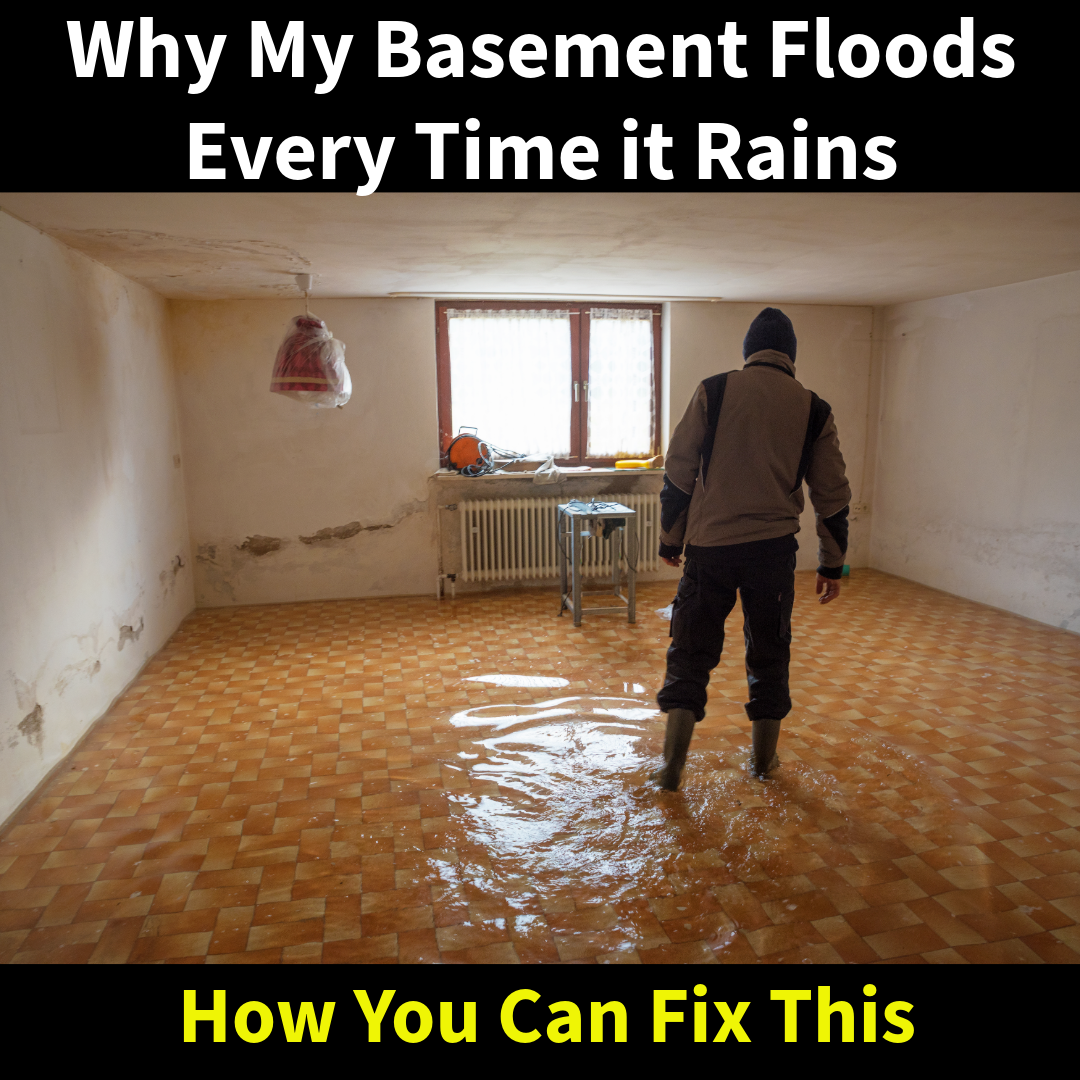
Why My Basement Floods Every Time It Rains

Few things are more frustrating for homeowners than walking into the basement after a heavy rain and finding water on the floor. Basement flooding is one of the most common water damage issues in homes, and in many cases it happens repeatedly because the underlying cause has never been properly identified.

Understanding why your basement floods every time it rains is the first step toward preventing future water damage and protecting your home.


Basement flooding rarely happens for just one reason. Often it is the result of multiple moisture issues working together.

Some of the most common causes include:

  • Poor exterior drainage around the home
  • Clogged or broken gutters and downspouts
  • Improper grading around the foundation
  • Foundation cracks allowing water intrusion
  • Failed sump pumps or backup systems
  • Sewer line backups during heavy storms

When large amounts of rainwater collect around a home’s foundation, pressure builds and forces water through even the smallest openings.


One of the biggest reasons basements flood during rainstorms is improper drainage around the home. If the soil slopes toward the house instead of away from it, rainwater collects around the foundation walls. Over time, that water begins finding pathways into the basement through cracks, joints, and porous concrete.

Homes that were built decades ago often experience this problem as landscaping and soil settle over time.


Gutters and downspouts are designed to move large amounts of water away from the structure. When they become clogged with leaves or debris, rainwater can overflow and pour directly next to the foundation. During heavy storms this concentrated water can quickly saturate the soil and lead to basement leaks.

Downspouts that discharge too close to the house can create the same problem.


Small cracks in foundation walls or floors can allow water to enter the basement when the surrounding soil becomes saturated. During heavy rainfall the pressure against the foundation increases significantly. Even hairline cracks can allow water to seep through under these conditions.

Older homes and homes with block foundations are particularly prone to this type of water intrusion.


Many basements rely on sump pumps to remove groundwater that collects around the foundation. If the sump pump fails, loses power, or cannot keep up with the volume of water during a major storm, flooding can occur quickly.

Without a functioning sump system, water has nowhere to go once it reaches the basement.


In some neighborhoods, heavy rain overwhelms municipal sewer systems. When that happens, water can back up through basement drains or plumbing fixtures.

This type of flooding is particularly serious because it often involves contaminated water, which requires professional cleanup and sanitation.


When water enters a basement and is not dried properly, moisture becomes trapped in building materials such as drywall, insulation, wood framing, and flooring. Within 24 to 72 hours, mold can begin developing in damp areas. Even if the visible water is removed quickly, hidden moisture behind walls or under flooring can still create ideal conditions for mold growth.

This is why proper water extraction and structural drying are critical after any basement flood.


If your basement floods during a rainstorm, acting quickly can help reduce long-term damage.

Important steps include:

  • Stopping the water source if possible
  • Removing standing water
  • Protecting belongings and electrical equipment
  • Documenting the damage for insurance purposes
  • Identifying where the water is entering the home

However, basement flooding often leaves hidden moisture behind walls, inside insulation, and under flooring. Without proper drying equipment and moisture detection tools, these areas can remain wet long after the visible water is gone.

In situations where flooding is significant or moisture has spread into building materials, professional water damage restoration services are often necessary to properly extract water, dry structural materials, and prevent mold growth.


If your basement floods every time it rains, the issue usually stems from drainage problems, foundation conditions, or plumbing infrastructure that cannot handle heavy stormwater. Identifying the cause and correcting it is essential to prevent repeated water damage and mold growth.

Professional inspections can help determine where water is entering the home and what steps are needed to properly resolve the problem.


Recurring Basement Flooding? Why it Happens & How to Stop It

It’s a scenario homeowners know all too well: a heavy rain rolls in, and once again, water is creeping into the basement. You mop it up, maybe even install a small sump pump, and hope it’s the last time. But then it happens again—and again. If this sounds familiar, you’re not alone. At MSI, we’ve seen countless cases where recurring basement flooding turns from a nuisance into a full-blown disaster.

Here’s why it keeps happening—and more importantly, how to stop it.

Common Causes of Recurring Basement Flooding

Basement water isn’t always about a single bad storm or a broken pipe. In many cases, it’s the result of a chronic issue that hasn’t been fully addressed. Here are the most common causes:

1. Poor Grading and Drainage Around the Foundation

If your yard slopes toward your house rather than away from it, you’re inviting water right to your foundation. Add clogged gutters or short downspouts, and rainwater will saturate the soil and push its way into your basement walls.

2. Hydrostatic Pressure

When the soil around your foundation becomes overly saturated, it creates pressure that pushes water through even the tiniest cracks in concrete. This type of seepage can happen repeatedly—even in homes without visible damage—especially if the water has nowhere else to go.

3. Failing or Inadequate Sump Pump System

A sump pump is your basement’s first line of defense. But if it’s undersized, old, or missing altogether, water will accumulate quickly. And if your pump doesn’t have a battery backup, a power outage during a storm leaves your basement vulnerable.

4. Cracks in the Foundation or Walls

Even hairline cracks can let water in—especially during freeze-thaw cycles when they expand. Over time, water infiltration leads to mold, structural issues, and property damage.

5. Leaking Window Wells or Bulkheads

Older or improperly sealed basement windows are a common failure point. Water collects in the wells and seeps through the frame or surrounding masonry.


Why This Isn’t Just a One-Time Problem

Recurring basement water is more than just annoying—it’s a sign that something is failing behind the scenes. And each time water enters your home, it’s doing more damage than you might see on the surface:

  • Mold growth begins within 24-48 hours.
  • Insulation and drywall lose integrity with every wetting.
  • Wood rot and framing damage can happen invisibly behind walls.
  • Air quality deteriorates, especially if mold spores enter the HVAC system.

How to Permanently Solve Basement Water Problems

A quick patch won’t do the trick. If you’re serious about ending recurring flooding, here’s what you should be considering:

✅ Improve Exterior Drainage

Re-grade the soil around the home to slope away from the foundation. Extend downspouts at least 6–10 feet away. Clean your gutters regularly.

✅ Install or Upgrade a Sump Pump

Invest in a quality sump pump with a battery backup system. Consider installing a water-level alarm for early warnings.

✅ Seal Cracks and Waterproof the Walls

Professional-grade epoxy or polyurethane injection can seal foundation cracks. For major issues, exterior waterproofing membranes may be required.

✅ Install a French Drain or Interior Drain Tile System

These systems collect and redirect groundwater before it can enter your home, making them one of the most effective long-term solutions.

✅ Dehumidify to Prevent Mold

Basements tend to be humid even without standing water. A commercial-grade dehumidifier keeps humidity levels in check and helps prevent mold before it starts.


Final Thoughts

If you’re constantly dealing with basement flooding, it’s not bad luck—it’s a solvable problem. The key is identifying the real cause and addressing it head-on, not just cleaning up the mess each time.

At MSI, we’ve helped thousands of homeowners stop basement flooding for good by combining waterproofing strategies with mold prevention. The sooner you act, the less damage—and cost—you’ll face.

Summer Storms Are Coming: Is Your Basement Ready?

When summer rolls in, so do powerful thunderstorms — and they can do more than just shake the windows. Heavy rains, flash floods, and overwhelmed gutters can quickly lead to basement water damage. At MSI, we’ve seen firsthand how fast a little water can turn into a big problem.

Why Summer Storms Pose a Risk

  • Sudden Downpours: Quick bursts of rain can overload drainage systems and pour water into basements.
  • Clogged Gutters & Poor Grading: Water that can’t flow away from the house will find its way in — often through foundation cracks or window wells.
  • Power Outages: A failed sump pump during a storm means rising water has no escape route.

The Real Cost of Ignoring It

Water damage doesn’t stop at a wet floor. Moisture trapped in walls, flooring, and insulation can lead to mold growth in just 24–48 hours. That means health risks for your family, especially those with allergies or asthma — and expensive cleanup costs if not caught early.

How to Prepare Your Basement Now

  • Test Your Sump Pump before storms hit.
  • Check Downspouts and Gutters for debris and proper drainage flow.
  • Inspect Your Grading to ensure water is directed away from your foundation.
  • Seal Basement Windows and cracks in walls before water finds them.
  • Have a Professional Inspection if you’ve experienced water issues before — prevention is far cheaper than repair.

Already Dealing with Water Damage?

Don’t wait. MSI offers emergency water damage response throughout Pennsylvania, New Jersey, and Delaware. We don’t just dry — we detect hidden moisture, treat for mold, and ensure your home is safe from top to bottom. Summer storms are unpredictable — your preparation doesn’t have to be.
Call MSI today for a free consultation or storm-readiness assessment.

Why Proper Landscaping Grading Matters: How to Protect Your Home

When most people think about landscaping, they focus on aesthetics—lush lawns, blooming flowers, and decorative stonework. But there’s a critical, less glamorous aspect of landscaping that can make or break the health of your home: grading.

Improper grading can direct rainwater toward your home instead of away from it. Over time, that water can seep into the foundation, triggering structural damage, basement flooding, and mold growth. At MSI, we’ve seen firsthand how a small grading issue outside becomes a major restoration project inside.

What Is Landscaping Grading?

Grading refers to the slope of your yard and how it directs rainwater runoff. Ideally, the ground around your home should slope away from the foundation at a rate of at least 6 inches over the first 10 feet. This helps water flow away naturally rather than pooling near your home.

The Risks of Poor Grading

When water collects near your foundation, it doesn’t just sit there harmlessly. Here’s what can happen:

  • Basement or crawl space flooding
    Standing water puts pressure on foundation walls and often finds its way inside through cracks or porous materials.
  • Foundation cracking or shifting
    Excess moisture can erode the soil supporting your foundation, leading to cracking, shifting, and even settlement issues.
  • Mold and mildew growth
    Water that seeps inside creates the perfect humid environment for mold—often hidden behind walls or under flooring where it goes unnoticed.
  • Damage to flooring, drywall, and insulation
    Once water enters your home, it quickly begins to destroy building materials and can lead to costly repairs.

Just Because You Don’t See Mold…

It’s important to note: mold doesn’t always grow right away—and it doesn’t always grow where you can see it. Many homeowners only discover mold when they notice a musty odor or experience health symptoms. That’s why it’s critical to control moisture from the outside before it ever becomes an indoor problem.

What You Can Do

If you’re unsure about the grading around your home, here are a few simple steps to take:

  • Walk around your home after a heavy rain. Is water pooling near the foundation?
  • Check basement walls for dampness or efflorescence (white powdery residue).
  • Install or adjust downspouts and gutter extensions to direct water away.
  • Regrade soil around your foundation if necessary, or consider professional drainage solutions.

How MSI Can Help

While we don’t provide landscaping services, we regularly assist homeowners who experience water damage and mold issues that stem from poor grading. Our team offers:

  • Mold inspections and testing
  • Water damage restoration
  • water extraction and structural drying
  • Professional mold remediation if damage has already occurred

By catching the issue early and understanding where the water is coming from, you can prevent a minor slope problem from becoming a major mold infestation.

What One Inch of Rain Can Do to Your Basement

To most people, an inch of rain doesn’t sound like much. But when your basement is the lowest point in your home, that inch can quickly lead to soaked carpets, damaged drywall, and the kind of hidden moisture that mold loves.

Why Basements Are So Vulnerable

Basements naturally collect water for a few key reasons:

  • Hydrostatic Pressure: When the ground becomes saturated, water pushes against your foundation walls and seeps through cracks, joints, or even solid concrete over time.
  • Gutter and Downspout Issues: If water isn’t properly directed away from your home, it flows straight toward the foundation.
  • Sump Pump Overload or Failure: Most people don’t realize their sump pump has a limit—or that it can fail when they need it most, especially during power outages.

What Happens When That Water Gets In

Even a minor basement leak can turn into a major issue fast:

  • Drywall and insulation absorb water quickly and can start to grow mold in 24 to 48 hours.
  • Flooring, wood trim, and carpet can warp, stain, and start to smell if not dried immediately.
  • Stored items, especially in cardboard boxes, are often unsalvageable.
  • Odors and air quality decline rapidly, especially in finished basements.

Fast Action Makes All the Difference

Prevention is always a plus, but once water gets in, time is critical. That’s where MSI comes in.

We provide:

  • 24/7 emergency water extraction
  • Complete structural drying
  • Moisture detection and mold prevention
  • Help navigating your insurance claim

Don’t wait until there’s visible mold or serious damage. If your basement feels damp, smells musty, or you’re seeing puddles after rain—call MSI immediately. We’ve seen what one inch of rain can do… and we’re here to stop it from getting worse.

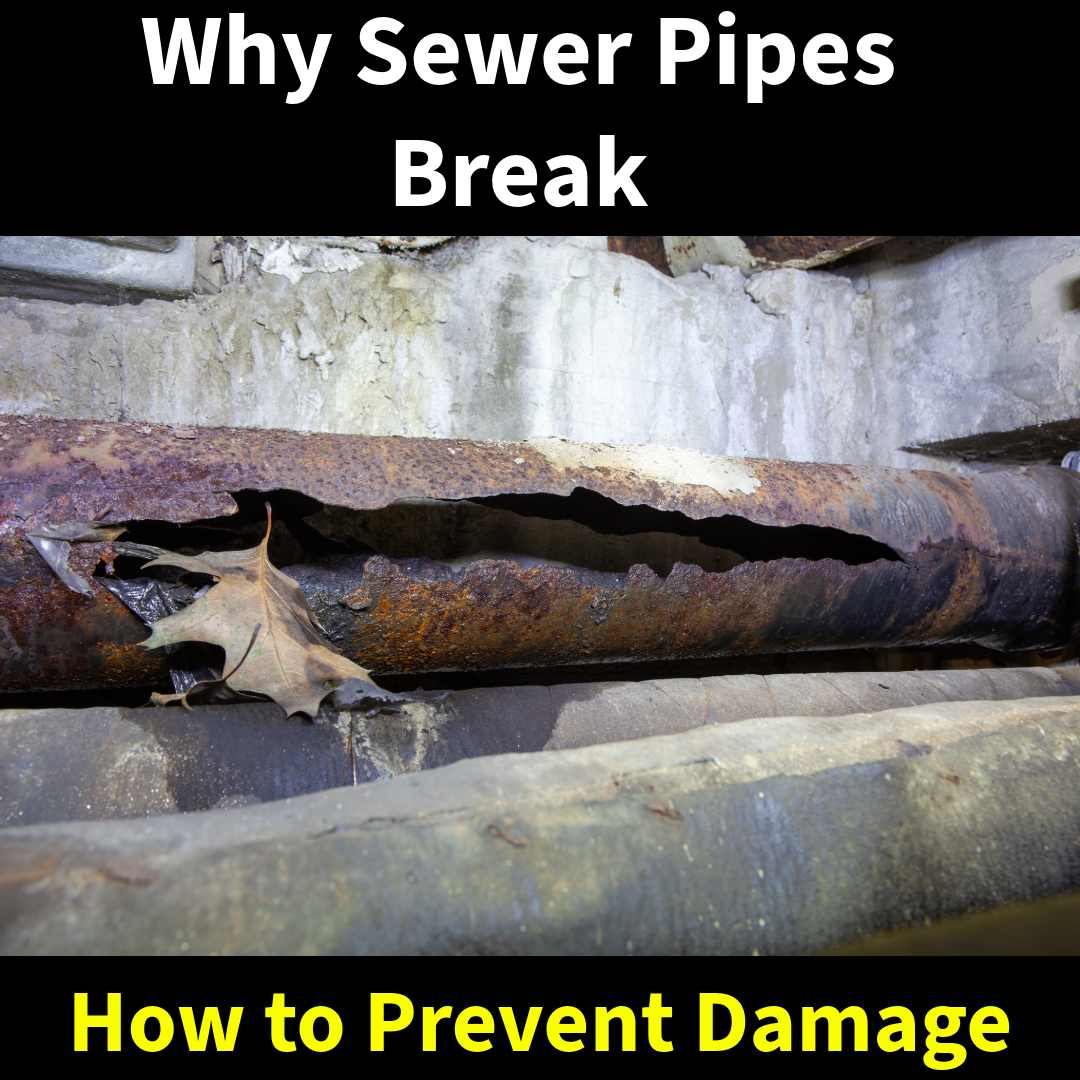
Why Sewer Pipes Break

Sewer pipes play a crucial role in our plumbing systems, transporting wastewater away from our homes and businesses. However, these underground pipes are not immune to damage. Cracks in sewer pipes can lead to significant problems, including leaks, blockages, and costly water damage restoration. In this blog, we’ll explore the main reasons why sewer pipes crack and what homeowners can do to prevent these issues.

Age and Wear

One of the most common reasons sewer pipes crack is simply due to age. Most sewer pipes have a lifespan of 50 to 100 years, depending on the material. Over time, natural wear and tear can weaken the pipe walls, making them more susceptible to cracking. Older pipes made from materials like clay or cast iron are particularly vulnerable.

Soil Movement

Soil movement is another significant factor that can lead to cracked sewer pipes. Changes in soil composition, settling, or erosion can put pressure on pipes, especially if they are installed too shallowly. Additionally, tree roots can grow into pipes, exerting pressure and causing cracks or blockages.

Improper Installation

If sewer pipes are not installed correctly, they can be prone to damage. Poorly aligned pipes, inadequate support, or improper backfilling can lead to stress and cracking over time. It’s crucial to have professional installation to ensure pipes are laid at the right depth and angle.

Extreme Weather Conditions

Extreme weather, such as heavy rain, freezing temperatures, and prolonged drought, can impact the integrity of sewer pipes. Heavy rain can saturate the soil, leading to erosion and shifting, while freezing temperatures can cause the ground to expand and contract, putting pressure on the pipes.

Corrosion

Certain materials, especially metal pipes, can corrode over time. Factors such as soil acidity, moisture, and chemical exposure can accelerate corrosion, weakening the pipe structure and leading to cracks. Regular inspections can help identify corrosion early and prevent further damage.

Blockages

Blockages caused by grease buildup, flushable wipes, foreign objects, or tree roots can increase pressure within sewer pipes, leading to cracks. When wastewater cannot flow freely, it creates stress on the pipe walls, which can ultimately result in damage.

Groundwater Pressure

In areas with high groundwater levels, the pressure from surrounding soil and water can impact sewer pipes. Excessive groundwater pressure can lead to cracks and even cause pipes to collapse if they are not designed to withstand such forces.

Consequences of Cracked Sewer Pipes

Cracked sewer pipes can lead to a range of issues, including:

  • Leaks: Wastewater can leak into the surrounding soil, potentially contaminating groundwater and harming local ecosystems.
  • Odors: Cracks can allow sewer gases to escape, leading to unpleasant odors inside and outside your home.
  • Blockages: Cracks can attract debris and roots, leading to clogs that can back up the entire plumbing system.
  • Costly Repairs: Sewer backups lead to black water floods which can be costly, and wreak havoc on your home, destroying personal contents and your structure. Always consult a water damage restoration specialist when dealing with sewer backups.

Preventive Measures

To minimize the risk of cracked sewer pipes, homeowners should consider the following preventive measures:

  • Regular Inspections: Schedule periodic plumbing inspections to identify potential issues before they escalate.
  • Proper Landscaping: Avoid planting trees or large shrubs near sewer lines, as roots can infiltrate and damage pipes.
  • Maintain Drainage: Ensure proper drainage around your property to reduce soil movement and erosion.
  • Avoid Chemical Drain Cleaners: These can corrode pipes over time, leading to weakened structures.

Understanding why sewer pipes crack is essential for every homeowner. By being aware of the causes and taking preventive measures, you can help ensure the longevity of your plumbing system and avoid the costly consequences of sewer pipe damage. If you suspect a problem with your sewer pipes, don’t hesitate to contact a professional plumber for an inspection and repair. If you have a sewer backup that has caused flooding, this type of loss should be handled by a water damage restoration professional, as the water itself is highly contaminated.

Does a Finished Basement Add Value?

When considering ways to boost your home’s value, basement finishing often comes up as a potential upgrade. Transforming an unfinished or partially finished basement into a fully functional living space can offer numerous benefits. But how exactly does finishing your basement impact your property’s value? Let’s explore the key factors and benefits of basement finishing, and understand its potential return on investment.

What is Basement Finishing?

Basement finishing involves converting an unfinished basement into a livable space. This process typically includes installing drywall, flooring, lighting, and other essential features to make the area usable. Popular basement finishing ideas include adding extra bedrooms, creating a home office, establishing an entertainment room, or even designing a rental unit.

How Basement Finishing Can Increase Home Value

  1. Increased Usable Square Footage: One of the most significant advantages of basement finishing is the increase in usable square footage. This additional space can enhance your home’s value by making it more attractive to potential buyers. More square footage often translates into a higher home appraisal and increased selling price.
  2. Enhanced Home Functionality: A finished basement adds valuable functionality to your home. Whether you choose to create an extra bedroom, a playroom, or a dedicated home office, these improvements can make your property more versatile. The enhanced functionality can appeal to a wider range of buyers, potentially increasing your home’s market value.
  3. Potential Rental Income: Converting a finished basement into a separate rental unit can provide a source of passive income. In areas with high rental demand, this feature can be particularly appealing. The potential for rental income can significantly boost the overall value of your home, although it’s essential to check local zoning laws and regulations before pursuing this option.
  4. Increased Market Appeal: A professionally finished basement can enhance your home’s appeal to potential buyers. Move-in-ready spaces are highly desirable, and a well-executed basement finish can be a key selling point. However, the impact on value can vary depending on current market trends and buyer preferences in your region.
  5. Return on Investment (ROI): The return on investment for basement finishing can be substantial, though it varies. On average, homeowners can expect to recover a significant portion of their investment. Factors such as the quality of the finish, the real estate market, and the specific characteristics of your home influence the ROI. High-quality finishes and professional craftsmanship generally result in better returns.

Key Factors to Consider

  1. Cost vs. Value: Basement finishing can be a considerable investment. Costs may range from a few thousand dollars for basic updates to tens of thousands for high-end renovations. Weighing the potential increase in home value against the renovation costs is crucial. Consulting with a real estate agent or appraiser can provide insights into how much value a finished basement may add in your local market.
  2. Quality of Work: The quality of the basement finishing plays a critical role in determining its impact on home value. High-quality materials and professional installation will likely yield better returns compared to a DIY approach or substandard work.
  3. Local Real Estate Market: The value added by a finished basement varies based on your local real estate market. In some areas, finished basements are highly desirable, while in others, they may have a more modest impact. Understanding local market trends can help you gauge the potential value added by basement finishing.
  4. Condition of Your Home: If your home is in good condition and the basement is underutilized, finishing it can offer a good return on investment. However, if your basement is prone to water damage and thusly mold, you’ll need to take preventive measure to avoid such problems after the basement is finished, If the basement is finished, then having water damage and mold issues will only ruin the basement and increase the cost for water damage restoration and/or mold remediation.

Conclusion

Finishing your basement can be a valuable investment, enhancing both functionality and market value. While a finished basement generally improves your home’s appeal and can increase resale value, the exact return on investment will depend on factors such as the quality of the work, your local real estate market, and your home’s overall condition. And offering an added space, albeit free from the usual basement issues that can arise like water damage and mold, can add your home’s value and quality of life as you enjoy the finished space.

Waterproof Flooring: What You Need to Know

When it comes to choosing flooring for your home, especially in areas prone to moisture like kitchens, bathrooms, and basements, waterproof flooring stands out as an essential consideration. Waterproof flooring not only protects your home from water damage but also offers durability, ease of maintenance, and aesthetic appeal. If you’re considering an upgrade or a new installation, here’s everything you need to know about waterproof flooring.

Why Choose Waterproof Flooring?

  1. Protection Against Water Damage: Waterproof flooring is designed to withstand spills, splashes, and even minor floods without warping, buckling, or staining. This is particularly valuable in high-moisture areas like bathrooms, kitchens, and basements where traditional flooring options might struggle.
  2. Durability and Longevity: Many waterproof flooring options are incredibly durable and can handle heavy foot traffic, making them ideal for both residential and commercial spaces. They often come with warranties that guarantee their performance and longevity.
  3. Ease of Maintenance: Waterproof floors are generally easy to clean and maintain. They resist stains and are often less susceptible to damage from spills or accidents. Regular sweeping and occasional mopping are usually all that’s needed to keep them looking new.
  4. Variety of Styles: Advances in flooring technology have led to a wide range of styles and finishes in waterproof flooring. From luxurious vinyl planks to elegant laminate, you can find options that mimic the look of natural wood or stone, fitting seamlessly with your home’s décor.

Types of Waterproof Flooring

  1. Luxury Vinyl Plank (LVP) and Luxury Vinyl Tile (LVT): Luxury vinyl is one of the most popular choices for waterproof flooring due to its high durability and variety of styles. LVP and LVT come in various designs, including wood and stone looks, and are both resistant to water and scratches. They often feature a click-lock installation system, making them a favorite among DIY enthusiasts.
  2. Waterproof Laminate Flooring: Traditionally, laminate flooring wasn’t the best choice for wet areas due to its susceptibility to moisture. However, waterproof laminate has evolved with a specially designed core that resists water damage. It offers the appearance of natural wood or stone at a more affordable price point.
  3. Ceramic and Porcelain Tile: Ceramic and porcelain tiles are naturally water-resistant, making them an excellent choice for areas with high moisture. They are available in countless designs, sizes, and colors. While they can be cold and hard underfoot, adding area rugs can provide comfort.
  4. Engineered Hardwood with Waterproof Finish: Engineered hardwood floors are made from a layer of real wood over a plywood base. When treated with a waterproof finish, these floors offer a combination of natural wood aesthetics and water resistance. They are suitable for areas with occasional moisture but may not be ideal for consistently wet environments.
  5. Rubber Flooring: Rubber flooring is a versatile option that offers waterproof qualities, along with excellent slip resistance and durability. It’s commonly used in commercial settings but can also be a practical choice for home gyms and playrooms.

Benefits of Waterproof Flooring

  1. Prevents Mold and Mildew: Waterproof flooring helps prevent the growth of mold and mildew by keeping moisture from seeping into the subfloor. This is particularly beneficial in areas prone to humidity and dampness.
  2. Enhances Home Value: Installing high-quality waterproof flooring can enhance your home’s value by offering potential buyers a feature that adds both function and aesthetics. It’s a practical upgrade that can set your home apart from others on the market.
  3. Increases Comfort: Many waterproof flooring options offer added comfort compared to traditional materials. For instance, luxury vinyl planks can have a softer, warmer feel underfoot, making them more comfortable for standing or walking.
  4. Eco-Friendly Options: Some waterproof flooring materials, such as certain types of luxury vinyl and engineered wood, are available in eco-friendly versions. These options often use recycled materials or sustainable production practices, helping you make an environmentally conscious choice.

Protecting Your Stored Items

Most homeowners utilize their basements for storage, but protecting them is something many don’t think about until a disaster occurs. A failed sump pump, pipe burst or water event from flooding, for instance, can spell disaster if you have cardboard boxes full of belongings piled on the floor. That’s why, if you have basement storage, it can’t hurt to take steps when it’s dry to help protect your items from potential water damage and mold.

Preserve Your Memories

The Library of Congress advises against storing photographs in the basement, which may be prone to leaks or extreme temperatures. The U.S. National Archives and Record Administration also suggests avoiding the basement, unless it has a a commercial grade or professional sized dehumidifier; otherwise, your photos may be exposed to moisture that could case them to get stuck together. But if your photos end up down there, you’ll likely want to preserve your memories the best you can. The National Archives suggests storing photographs in plastic enclosures made from uncoated pure polyethylene, polypropylene or polyester to preserve them.

Store Important Files in a Safe

If you’ve ever waited in line for hours to receive a new Social Security card or if you travel frequently, then you know how important it is to keep birth certificates, savings bonds, passports and other critical documents in one place that is easy for you to access. If you plan to keep these documents in the basement, you also need them to stay dry. The Federal Emergency Management Agency suggests storing important documents in waterproof containers in a high location, or in a waterproof or fireproof safe.

Don’t Forget Your Digital Files

You’ve finally created digital files of your favorite photos and saved your almost-finished novel on a flash drive. Where should you store these digital files? Consider stashing your files in a safe. Before purchasing a safe, think about what you want to preserve. As noted by Consumer Reports, some safes can reach interior temperatures of 350 degrees Fahrenheit; depending on the format of your digital files, such as CDs used to store family photos, you may want to consider selecting a safe that better protects its contents from high temperatures.

Save Your Stamps

A little water in your basement could potentially wipe out a lifelong hobby if, for instance, your stamp collection is not properly stored. If you must store such valuables in your basement, the Smithsonian National Postal Museum advises placing your items on a high shelf. The museum cautions, though, against using a shelf located along a concrete wall or or near an exterior door, as heat, humidity and even dryness may put your collection at risk.

Care for Seasonal Decor

Storing seasonal items in your basement can be a useful especially if you go all out. But keeping those items free from damage will help preserve the integrity of said items for years of use. By storing items in plastic containers or bags, while keeping them off of the floor can be valuable in the event of a major water loss in your basement. Outdoor ornaments and other decor should be cleaned thoroughly at the end of the season so not to introduce the potential of burrowing insects, rodents and even mold into your home.

Perform Routine Maintenance

Some regular maintenance may help prevent water from trickling into the basement. According to the International Association of Certified Home Inspectors, homeowners should inspect sump pumps annually to ensure the pump’s components are not jammed or tangled. Don’t forget the exterior of your house, too. Seattle Public Utilities suggests cleaning gutters and drainage downspouts about twice per year to keep water flowing off and away from your home. The agency also recommends directing downspouts so that water flows away from your foundation while not directing the water towards your neighbor’s property.

Basements can offer large spaces for storage, but a basement also needs to be a safe space. Keeping water damage and high levels of humidity out of your basement will prevent the chance of mold growth, and thusly ruining your items. Installing a proper commercial grade dehumidifier can regulate humidity levels and not make your space conducive to mold growth. While waterproofing your basement can also eliminate mold. If a water event should occur, having a professionally trained water damage restoration company perform the cleaning and drying will not only save your personal belongings, but also your property.

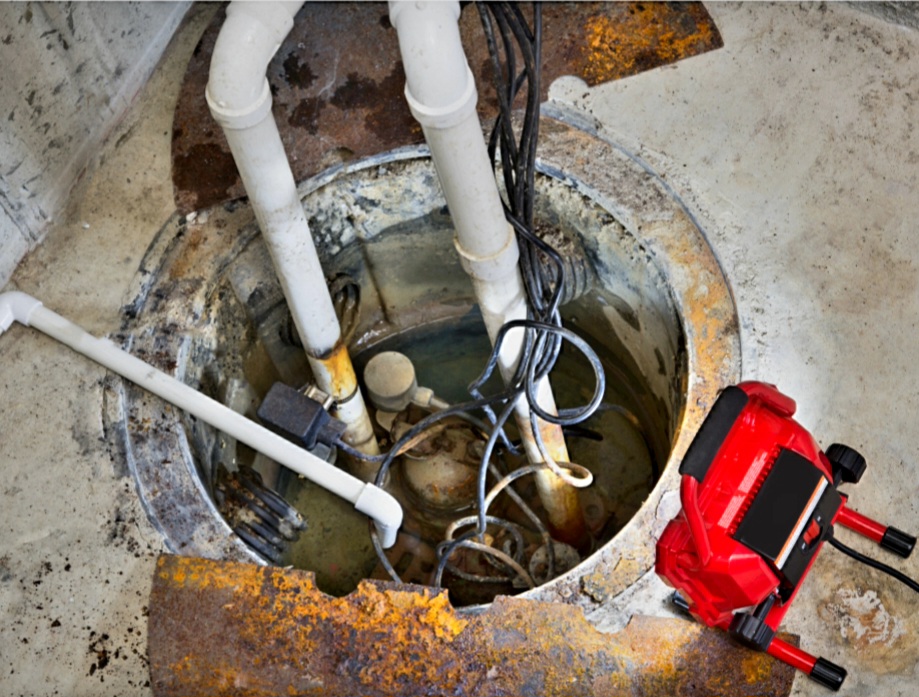
How to Inspect a Sump Pump

How to Inspect a Sump Pump

A sump pump is a key component in your home that helps prevent ground- or rainwater from building up in your basement — pushing water out from under your home and helping to keep it away from the foundation. As with any other system or appliance in your home, a sump pump needs regular maintenance to help make sure its functioning properly.

Here are the five things a professional should examine during an annual inspection of a sump pump, according to InterNACHI:

  1. The alarm. Not all sump pumps have alarms that sound when the device is activated. If a sump pump has one, it should be tested to help ensure it functions.
  2. The check valve. A professional should make certain that there is a check valve on the discharge pipe. The check valve may help prevent water from flowing back down the discharge pipe after it is pumped out.
  3. A backup power source. Sump pumps often need to work during extreme weather conditions that may result in power outages. A professional may confirm there is a backup power source on a sump pump, such as a battery, and that it is working.
  4. The pit. A sump pump sits in a pit which gathers water until the pump removes it. The pit needs to be large enough — at least 24 inches deep and 18 inches wide — for the sump pump to function properly.
  5. The discharge location. The discharge location is recommended to be at least 20 feet from a home to help prevent water from draining onto neighboring properties, into public sewer systems or into a residential septic system.

A sump pump can be an important tool to help prevent excess ground- or rainwater from entering your home resulting in costly water damage and mold. But, as with any appliance or system, a little planning and regular maintenance is required to help ensure proper function.